

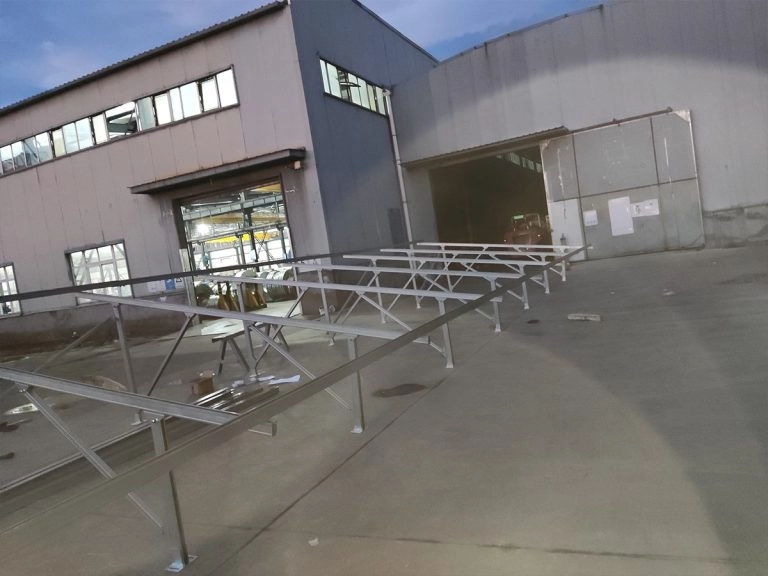
Material Selection for Solar Mounting Longevity
Selecting the right material for solar racking is not just a line item in a budget; it is the fundamental insurance policy for the entire energy asset. If the structural frame fails, the panels—no matter how efficient—become liabilities.
Why Steel Choice Matters in Photovoltaic Infrastructure
The structural integrity of solar arrays depends heavily on the durability of the steel channel and support components. When designing a utility scale project, the perspective must shift from “getting it built” to “keeping it standing” for a quarter century.
Long term exposure to outdoor elements requires superior corrosion resistance. It is common to see sites where the modules are pristine, but the mounting rails show signs of pitting or “red rust” after only five years.
This is a failure of material specification. Material selection directly impacts the total cost of ownership and maintenance schedules for solar farms. If a team has to go out every three years to treat rust on a steel channel, the initial savings on cheaper material are quickly evaporated by labor costs and downtime.
Hot Dip Galvanized (HDG) Steel: The Traditional Industry Standard
For decades, Hot Dip Galvanizing has been the default answer for outdoor steel. It is a known quantity with a predictable performance curve in most rural or suburban settings.
HDG involves dipping fabricated steel into molten zinc to create a thick, protective layer. This creates a metallurgical bond that is quite robust. The process provides excellent sacrificial protection, where the zinc corrodes to save the underlying steel. Essentially, the zinc acts as a “bodyguard,” oxidizing slowly so the structural steel remains intact. HDG remains a reliable choice for standard environments with predictable atmospheric conditions.
However, in the field, we often see HDG struggle when the zinc layer is uneven or when the steel is drilled post galvanization, leaving the core exposed.
The Engineering Behind Zinc-Aluminum-Magnesium (Zn-Al-Mg) Coatings
The industry is moving toward Zn-Al-Mg coatings, and for good reason. It is not just a “new version” of galvanizing; it is a different chemical approach to protection.
How Magnesium Changes the Chemical Defense Mechanism
The addition of aluminum and magnesium creates a dense, stable protective film known as “Simonkolleite.” This isn’t just a marketing term; it’s a specific crystalline structure that forms on the surface. This specialized layer is significantly harder and more resistant to chemical wear than standard zinc.
While pure zinc is relatively soft and porous, the Simonkolleite layer acts as a barrier that is much harder to penetrate. Consequently, Zn-Al-Mg coatings offer superior performance in high ammonia or saline environments compared to traditional HDG. Think of a solar farm located near a poultry facility or a coastline—HDG would struggle there, but Zn-Al-Mg thrives.
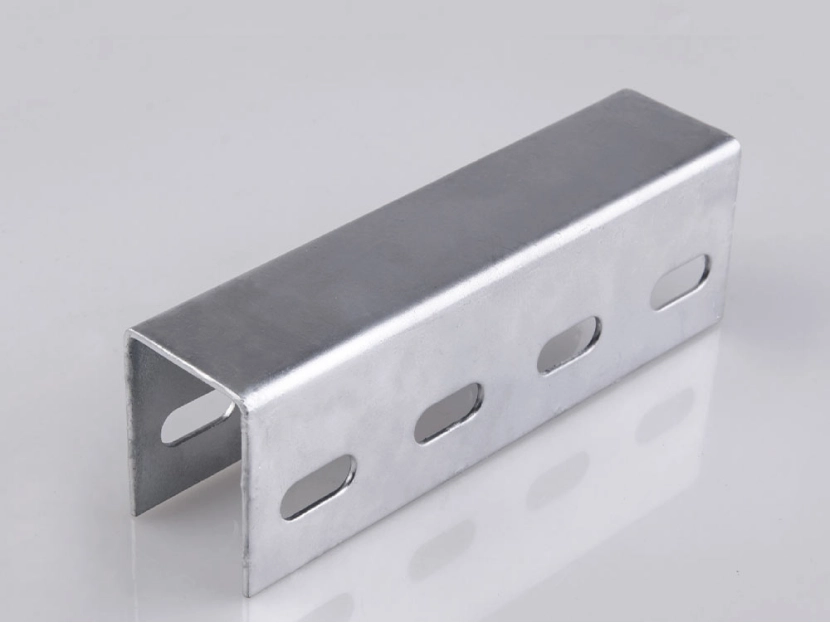
The Self Healing Properties of Zn-Al-Mg Steel
One of the most impressive observations in the field is how this material handles damage. When the стальный канал is cut or scratched, the coating migrates to cover the exposed edge. It is almost like a biological scab forming over a wound. This “self healing” effect eliminates the need for manual touch ups with cold galvanizing sprays.
In traditional HDG, every cut end or drilled hole is a ticking time bomb for rust unless someone manually paints it. Long term protection at the cut edges prevents the “red rust” commonly seen in traditional steel structures, which significantly reduces the quality control burden during installation.
Comparing Durability in Aggressive Environments
Environment matters more than almost any other factor in the BOM (Bill of Materials). A system in the Arizona desert faces different challenges than one on the coast of Florida.
Performance in Coastal and High Humidity Regions
Salt spray testing shows that Zn-Al-Mg can last several times longer than HDG in coastal zones. In some tests, Zn-Al-Mg showed five to ten times the corrosion resistance of standard galvanizing. Interestingly, the thinner coating of Zn-Al-Mg often outperforms thicker HDG layers due to its chemical stability.
This allows for a “less is more” approach. Reduced corrosion rates translate to thinner steel requirements, potentially lowering the overall weight of the mounting system. This weight reduction can ripple through the project, reducing shipping costs and making the components easier for crews to handle on site.
Structural Design and the Purlin Connection Challenge
The connection points are where the real engineering battles are won or lost. A solar array is only as strong as its weakest bolt or bracket.
Optimizing the Purlin Connection with Advanced Steel
Purlin connections are often the most vulnerable points for stress and moisture accumulation. Moisture gets trapped between the purlin and the rafter, creating a micro environment that accelerates corrosion. The high friction coefficient of Zn-Al-Mg surfaces can improve the stability of bolted connections. This means less “creep” or loosening over time due to wind vibration.
Furthermore, using pre-coated Zn-Al-Mg coils allows for more precise manufacturing of complex purlin profiles compared to post galvanized HDG. When you dip a finished purlin in a hot zinc bath (HDG), the heat can cause warping. Pre-coated steel avoids this, ensuring that every purlin connection fits perfectly every time.
Is Zn-Al-Mg More Cost Effective Than HDG?
Looking at the price per ton is a mistake. You have to look at the price per watt over the life of the project. While the initial material cost per ton may be higher, the reduction in weight and labor often offsets the price. If you can use a thinner gauge steel because the corrosion allowance is lower, you buy fewer tons of steel. Eliminating the post fabrication galvanizing step shortens lead times and reduces transportation costs to the galvanizing plant.
You go straight from the mill to the fabricator to the site. Maintenance free operation over decades provides a higher return on investment for utility scale projects. Avoiding even one “rust remediation” campaign over 25 years can save hundreds of thousands of dollars on a large site.
Choosing the Right Solution for Your Project Site
There is no “one size fits all” in solar mounting structures. Assessing soil pH, proximity to the ocean, and local industrial pollutants is essential before finalizing the BOM.
If the site is 100 miles inland in a dry climate, HDG remains a viable, cost effective solution for inland projects with low corrosive stress. It’s a workhorse that has served us well. However, transitioning to Zn-Al-Mg is recommended for developers looking to future proof their assets against climate variability.
With increasing humidity and unpredictable weather patterns, the extra margin of safety provided by magnesium enhanced coatings is becoming the professional choice.
Contact CZT Solar today to discuss your project requirements and get a customized solar mounting solution.
ЧАСТО ЗАДАВАЕМЫЕ ВОПРОСЫ
Q: Can I mix HDG and Zn-Al-Mg components in the same solar mounting structure?
A: It is generally not recommended. While both are zinc based, the difference in electrochemical potential can cause accelerated corrosion at the contact points. It is best to stick to one coating system for the entire steel channel and purlin connection assembly.
Q: Does Zn-Al-Mg look different than HDG?
A: Yes. Zn-Al-Mg typically has a smoother, flatter, and slightly darker grey appearance compared to the bright, spangled, and sometimes “drippy” look of Hot Dip Galvanized steel.
Q: Is the “self healing” property immediate?
A: No, it is a chemical process that occurs over weeks as the magnesium and aluminum react with the atmosphere to form the protective Simonkolleite layer over the exposed edge. You might see some initial “white rust,” which is actually the protective layer forming.





 Russian
  English
  Japanese
  Korean
  Spanish
  Arabic
  French
  Thai
Thai