

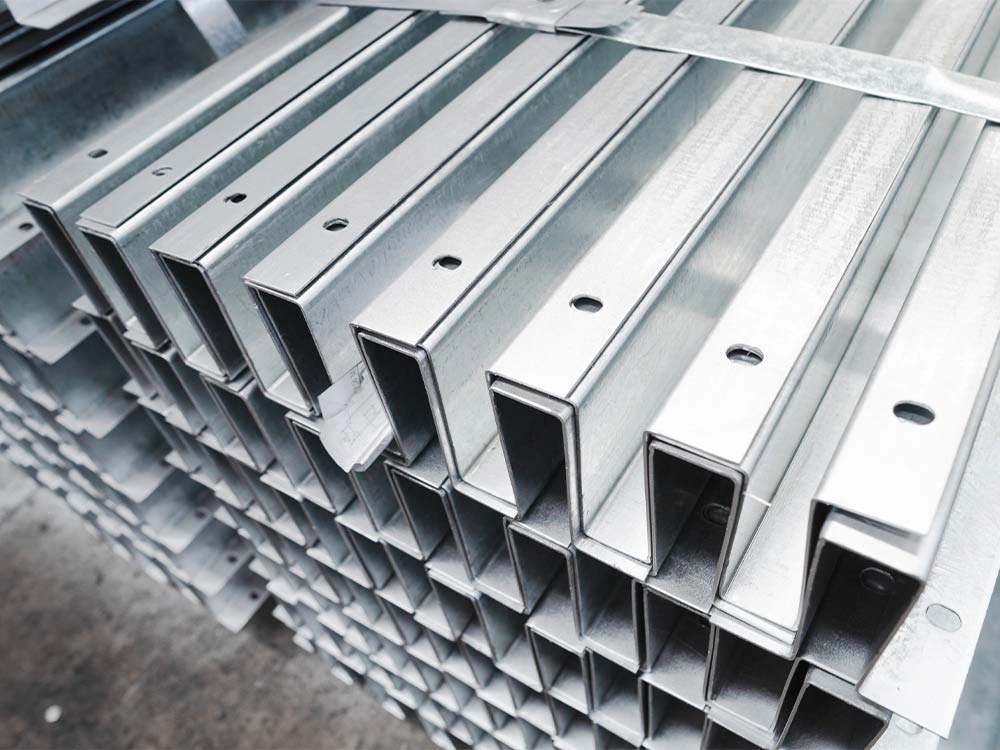
Every solar engineer knows that steel isn’t just a supporting material—it defines the lifespan and reliability of an entire solar farm. Picking a bad profile or the wrong coating can easily change a good 25 year project into a constant maintenance problem.
Selecting the Right Steel Profiles for Utility-Scale Solar Success
Strong structures lead to better returns. Steel can bend, rust, or shift out of place. When this happens, power output falls and repair bills go up. Finding the right balance is tricky. The metal must carry heavy loads. At the same time, it needs to keep costs low and allow for quick assembly. On big sites, small delays add up fast across thousands of foundations.
Why Material Choice Dictates the Lifespan of Solar Farms
Rust prevention is an absolute must in open fields. Standard hot dip galvanizing is still common. However, Zinc-Magnesium-Aluminum (ZMA) coatings are gaining popularity. They offer unique self healing traits at scratches and cut edges. The special structure of ZMA builds a thick, safe layer. This layer fights off salt spray and ammonia. That makes it a vital choice for farms near the ocean or agricultural areas.
Selecting the right metal affects more than just toughness. It also changes how materials are moved and built. Lighter pieces lower the strain on cranes. They make daily handling much easier. Furthermore, they stay stiff against shaking caused by the wind. This prevents weld damage over a long period.
The Versatility of Unistrut Channels in Solar Arrays
Utility scale systems often rely on modularity to meet tight construction schedules. That’s where unistrut channels prove their worth.
How Unistrut Channels and Struts Simplify Component Integration
Канал UNITRUT systems allow flexible assembly without welding or on site fabrication. Their pre-punched holes eliminate field drilling, which helps preserve protective coatings from damage during installation. This detail might seem small but saves hours per array row when multiplied across thousands of modules.
Cable management is another hidden advantage. Unistrut profiles work perfectly as safe paths for DC wires or grounding lines. They keep the whole setup neat and follow strict electrical rules. Furthermore, they offer solid spots to mount junction boxes and inverter mounts. This cuts down the demand for extra clamps or brackets.
In tracker systems, these struts handle secondary loads efficiently while allowing quick realignment if site tolerances shift after pile driving. Field technicians appreciate this flexibility; it means fewer delays waiting for rework approval.
When Should You Choose H Steel Beams for Foundation Posts?
H steel beams are the top choice for foundation posts in massive ground mounts. Their shape strongly fights both bending and twisting under heavy pressure. Lateral stability is extremely important in places with strong winds or heavy snow.
Their smart shape allows them to go deep into the dirt without wasting metal. This makes them perfect for driven pile foundations. In these cases, vertical accuracy is the most important factor. For single axis trackers, a tiny tilt error of just a few millimeters can mess up rotation angles over long distances. Therefore, placing the H steel beams correctly has a huge impact on tracking success.
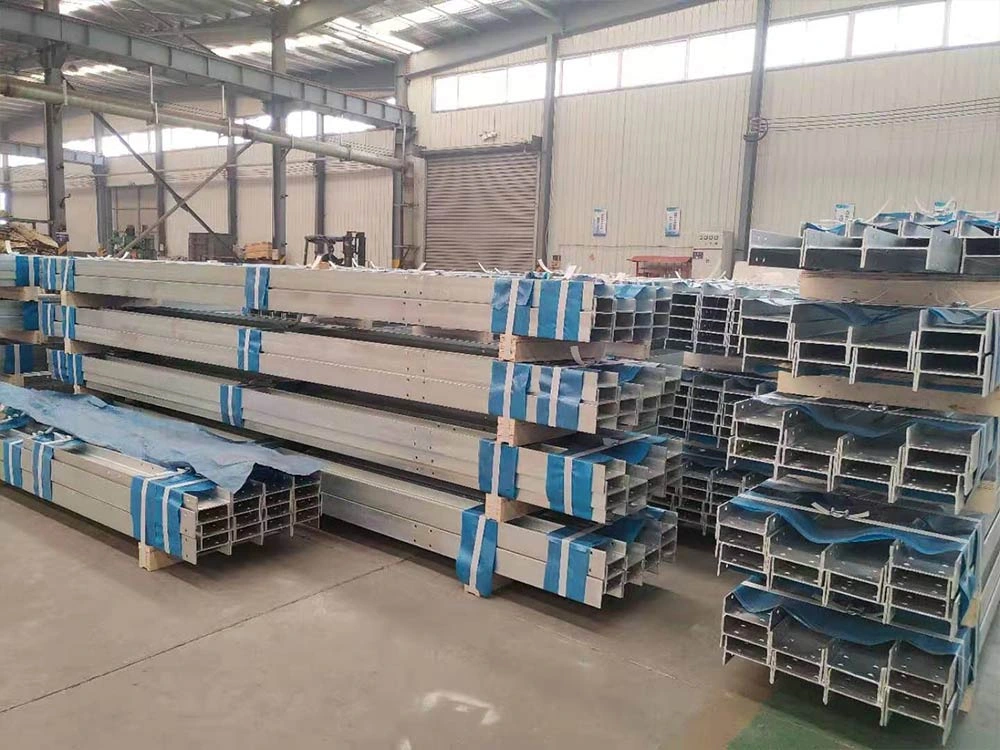
CZT Solar’s precision engineered H steel beams are manufactured with tight dimensional tolerances to ensure consistent vertical alignment during installation, minimizing post adjustment work on site.
Omega Steel Beams: The Solution for Lightweight Purlins
While H beams carry the main structural load, omega steel beams—or hat channels—shine in secondary framing roles.
Maximizing Strength to Weight Ratios with Hat Channels
The omega profile gives amazing twisting strength for its light weight. This makes it a great fit for rails or purlins placed right under the solar panels. These beams drop the total amount of steel needed. Consequently, they lower both the final price and the carbon footprint. They do all this without losing any stiffness.
These parts can fit inside each other. This allows for tight packing during transport. It is a highly valuable benefit when moving goods to distant desert locations. In those places, shipping fees take up a big part of the budget. Construction teams also find them much easier to carry by hand than heavy square tubes.
In setups with wide gaps, omega steel beams share the panel weight perfectly. They also limit bending when the wind tries to lift the panels. This is a small but vital detail for keeping modules lined up correctly over many years.
Comparing Structural Performance: H Beams vs. Omega Sections
Every single profile has a specific job in the building frame. H steel beams are perfect for main posts. This is because they resist bending in multiple directions. Omega steel beams do their best work as horizontal supports. In those spots, spread out weight dictates the overall design.
Looking at costs and benefits usually shows a clear winner. Using fewer but thicker H steel beams along with thinner omega steel beams gives the best value across different soil types. Soft mud needs deeper piles. On the other hand, rocky ground works better with shorter driven posts and lighter top frames.
Mixing these shapes builds a smart structural system. It perfectly balances stiffness with a good price. The frame stays strong exactly where it needs to be. It remains light everywhere else.
Addressing Common Challenges in Steel Procurement and Installation
Real site conditions almost never perfectly match the paper plans. Therefore, planning for rust and supply chain problems is just good engineering practice.
How Do We Prevent Galvanic Corrosion in Multi-Material Systems?
Galvanized steel sometimes touches aluminum rails or bolts. When this happens, bad chemical reactions can start if water connects the two metals. Rubber gaskets or special paints can stop this electrical loop completely. Picking the right matching bolts ensures that all parts age at the same speed.
Streamlining the Supply Chain with One Stop Manufacturing
Buying unistrut channels, H steel beams, and omega profiles from one single supplier makes planning much easier. Linked factory schedules cut down waiting times. They also stop the problem of different color finishes between separate orders.
Using one manufacturer also guarantees steady quality checks on all metal parts. This smooths out the final testing steps before the plant turns on. During that stage, any small delay wastes a lot of money.
Future Proofing Utility-Scale Structures with Advanced Coatings
Solar farms now aim to last well over twenty years. Because of this, paint and coating science continues to improve to handle tough outdoor weather.
Stepping away from basic zinc dipping is a big change. Moving toward self healing ZMA metal mixes is a major upgrade for long term survival. These modern coatings stay stuck to the metal even under heavy physical strain. They also beat normal zinc layers in salty or ammonia heavy air. You often find these harsh conditions at farms near the sea or close to animal pastures.
Modern metal science now creates thinner but much tougher shapes. They use special high strength steel. This drops the total amount of material needed. At the same time, it meets strict building rules set by global guides like EN 1993 or ASTM A572.
Reducing tonnage doesn’t just save money; it lowers transportation emissions and aligns solar infrastructure with broader decarbonization goals shared by the renewable industry worldwide.
Contact CZT Solar today to discuss your project requirements and find the right steel structure solution for your next solar farm.
ЧАСТО ЗАДАВАЕМЫЕ ВОПРОСЫ
Q1: What makes unistrut channels better than welded frames?
They are modular and completely reusable. They do not need any hot welding work at the site. This makes them perfect when fast speed and high safety are the top goals during huge builds.
Q2: Why do engineers still prefer H steel beams despite higher weight?
Because their geometry provides unmatched bending resistance under wind and snow loads—critical for maintaining array alignment over decades.
Q3: Are omega steel beams suitable for tracker systems?
Yes, particularly as purlins or rail supports where lightweight rigidity improves dynamic response without adding unnecessary mass.
Q4: How long can ZMA coated structures last compared to standard galvanized ones?
Field data suggests significantly longer service life under corrosive conditions due to ZMA’s self repairing surface chemistry at scratches or cut edges.
Q5: Can sourcing all profiles from one manufacturer really reduce costs?
Yes—it cuts coordination overheads, shortens delivery timelines, and guarantees uniform coating quality across every structural component used on site.





 Russian
  English
  Japanese
  Korean
  Spanish
  Arabic
  French
  Thai
Thai