

Introduction: Why Roll Forming Tolerances Matter in Solar Racking
One bolt slips through. The next catches the edge of the hole. Someone holds the rail while another installer loosens the bracket again.
That is where roll forming tolerances become a site issue. Allowing time for solar racking assembly is one thing. Allowing time to loosen every other bracket and try it again is quite another. The cost sits in labour hours as much as in rejected steel.
What Are Roll Forming Tolerances?
Roll forming involves a succession of bends as coil runs through shaped rollers. The section comes out gradually, rather than from a single press stroke. Finished pieces will vary a little. The tolerances on your drawing decide how much is acceptable.
Before tightening a steel channel tolerance, ask what happens at either end of its permitted range. Can the connector still enter? Does it seat properly?
Those answers help make dimensional tolerances useful when ordering roll formed steel profiles. The material and manufacturing capability still have to support the numbers.
Key Roll Forming Tolerances That Affect Solar Racking Assembly
Cross-Sectional Dimensions and Bend Angles
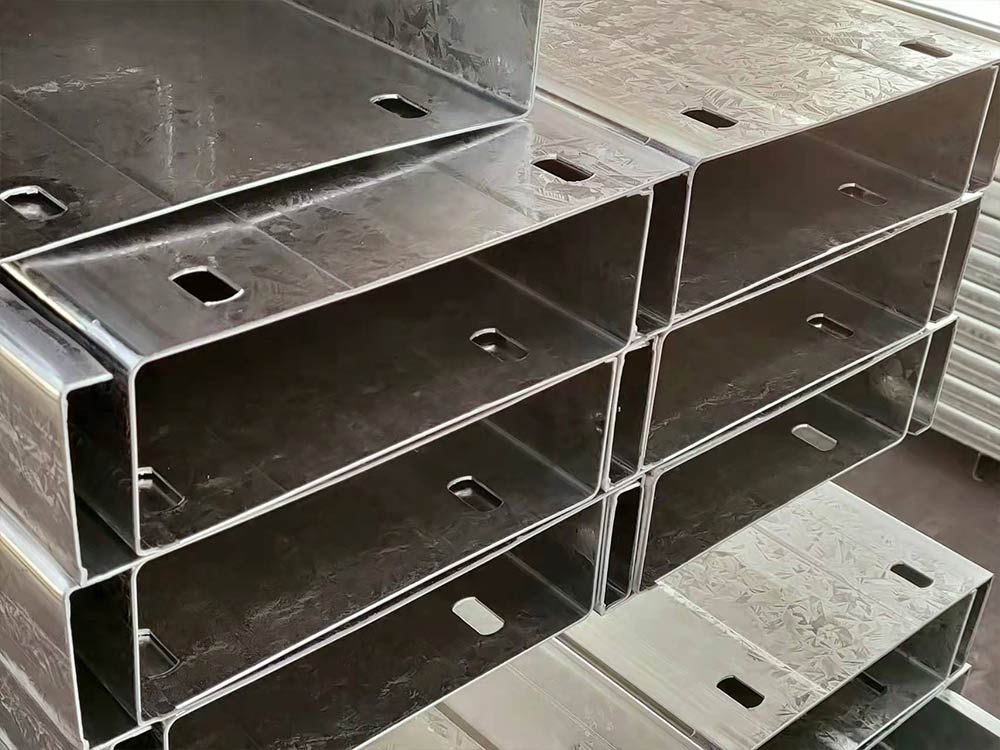
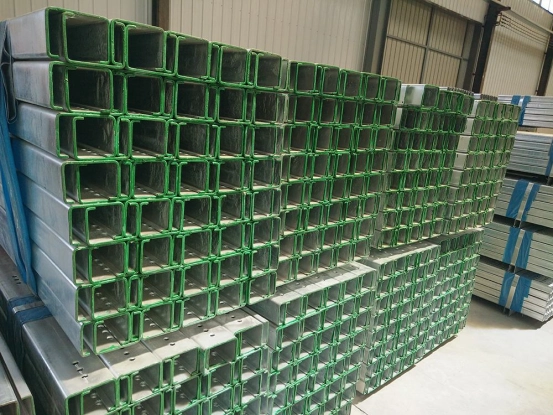
Check the web and flanges of C steel channels against the connector they receive. A lip that projects too far can obstruct insertion. Z sections bring their own mating angles to the joint.
The arithmetic helps here: 50 mm multiplied by sin(1°) gives about 0.87 mm. That’s the tip displacement from a 1° error on a 50 mm flange, showing up as daylight beneath a bracket.
Hole and Slot Position Tolerance
A correctly sized hole can still be in the wrong place. Check its centre against the drawing’s reference edge. Check pitch between holes separately.
Lay solar mounting brackets against their mating holes when reviewing hole position tolerance. Watch the slot direction too. Turning a slotted bracket through 90° changes the direction in which it can slide for adjustment.
Straightness, Bow, and Camber
Before tightening the rail, sight along it. A sideways curve or vertical bow may carry clamp positions away from the intended line. “Looks straight” won’t settle a disagreement at delivery; you need a recorded deviation over a specified length.
Twist and Cross-Sectional Deformation
Twist rotates the mounting face along the profile. A bracket may seat at one end but rock at the other. Uneven forming and asymmetric sections can contribute. With Canal non transit, also check the opening and lips where the selected channel nut engages.
Cut Length and End Flare
Length errors change splice locations or the intended bearing position. End flare is different: the cut end opens or closes as forming stresses release. Measure at the end as well as farther in when investigating a splice that won’t slide home.
How Tolerance Deviations Affect Solar Racking Assembly
Passing the individual checks doesn’t always settle the fit question. Suppose four dimensions along a joint each finish 0.5 mm above nominal, within a hypothetical ±0.5 mm allowance. Together, those deviations put the assembly 2 mm beyond its nominal position.
Your actual assembly may have a different chain. Draw it out before choosing the limits.
Misaligned rails can shift module clamp positions. Poor bracket contact adds another adjustment. Even a hypothetical three-minute delay repeated across 200 connections consumes ten hours of crew time. The steel price hasn’t changed. The installation bill has.
Don’t infer structural failure from that difficulty alone. Assess any safety implications against the connection design and applicable codes.
Which Tolerances Should Be Prioritized?
I’d spend the inspection effort on the joint: the spacing between its holes and the face that bears against the bracket. Then look along the member. Its length and the distance between supports help determine acceptable straightness and twist.
Be specific about the measurement origin. “From the end” can leave room for disagreement if that end is flared.
Before accepting a quotation based on “standard tolerances,” get the numbers written down. Check them against your drawings and applicable standards, and confirm production capability.
Factors That Influence Roll Forming Tolerances
An angle measured under forming pressure won’t necessarily stay there once the steel leaves the rolls. Some elastic recovery follows. Its extent depends partly on thickness and strength.
That makes a coil change worth checking. Tool wear and roll alignment add further variation. A hole punched into flat strip can distort near a bend, while the cutoff releases stresses at the ends.
When buying custom roll forming, ask to see how coil changes are handled. The approved sample may be fine. You still need the production batch to fit.
Quality Control Methods for Accurate Solar Mounting Components
An inspection report needs to answer the questions on the drawing. For the first article, put actual readings beside the permitted limits for dimensions that govern fit.
Calipers suit accessible widths. Hole gauges or dedicated fixtures help check connections; angle tools check the seating faces. Straightness and twist measurements need defined supports and a stated measurement length.
Then put the actual bracket on it and insert the specified fasteners. Does anything catch? Investigate that before signing off. Record batch results under an agreed sampling plan, including checks after relevant setup changes. Effective roll forming quality control connects those records to the parts actually shipped.
How to Reduce Tolerance-Related Assembly Problems
Send the section drawing alongside the hole pattern. A pre-punched hole beside a bend deserves another look: could it sit farther into the flat? Review unnecessary folds with the designer too, without sacrificing the strength the section needs.
Leave time for a sample connection before the bulk order. Use the specified coating condition for that trial. A bare sample cannot settle every question about finished fit.
Agree how long members will be supported during transport. Mark similar-looking parts clearly. A well-made rail in the wrong position can waste just as much time as a poorly made one.
Choosing a Reliable Solar Mounting Component Supplier
Ask for an inspection record tied to a drawing revision. Compare it with the acceptance method in the quotation. A low unit price means little if the two documents disagree.
When coordinating your solar mounting components, we can bring steel profiles and matching accessories into the same purchasing discussion. CZT Solar’s one-stop supply also covers welded parts and OEM metal fabrication. Specify material grade and thickness, then agree the coating. Send the mating-part drawings too; the channel drawing alone leaves half the joint unseen.
Frequently Asked Questions
What tolerances are important for solar racking assembly?
Prioritise section dimensions and hole positions. Check straightness, twist and cut length against the actual connection design.
How do hole position errors affect solar mounting systems?
Bolts may catch or fail to enter. Adjustment runs out when the error exceeds the available connection clearance.
Can tighter roll forming tolerances reduce installation costs?
Yes, if they save adjustment at the joint. You can still overspend on precision that the installation never needs.
Conclusion: Precision Starts with the Right Specifications
Set the critical roll forming tolerances before steel reaches the site. Agree how they will be measured and prove the connection with samples. Send CZT Solar your drawings with material specifications and assembly requirements to discuss the parts your project needs.






 French
 English
 Japanese
 Korean
 Spanish
 Arabic
 Russian
 Thai