

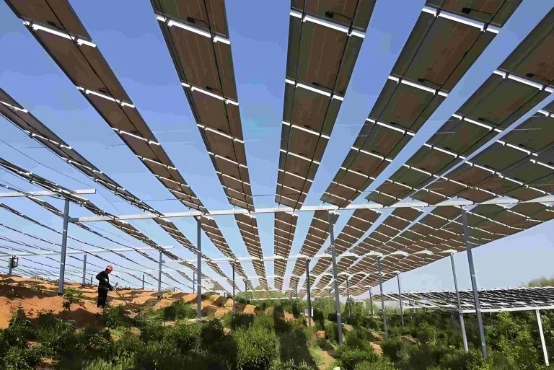
Agrivoltaic mounting design is not a standard ground-mount layout with taller posts. The structure must share the field with crops, workers, livestock, irrigation and machinery.
Clearance, row spacing and machinery routes should be fixed before steel sections are optimized. Once foundations are installed, correcting an access problem becomes expensive. The required dimensions also depend on the selected structure. Before fixing the layout, compare the available agrivoltaic mounting structure options for fixed, tracking and flexible systems.
What Information Should Be Collected Before Designing the Mounting System?
The agricultural operation should be mapped before the PV layout is frozen. Module quantity matters, but it is only one design input.
The team needs crop height, planting direction, seasonal work and machinery data. Equipment dimensions should include the widest attachment, highest operating position and turning radius.
Wind, snow, seismic and soil conditions still govern the structure. Higher tables and longer spans can make those loads more demanding.
Useful inputs include:
- Crop type and mature height
- Machinery dimensions in working position
- Access routes and turning zones
- Module size and table arrangement
- Topography, soil data and local loads
Missing several items usually means redesign.
How Much Vertical Clearance Does an Agrivoltaic System Need?
There is no useful universal value. The right clearance is the lowest height that allows the intended farm work without creating unnecessary structural cost.
A grazing field has different needs from an orchard using platform harvesters. The geometry should follow the real operation, not a generic diagram.
Clearance for Crops, Livestock and Workers
Crop height should be checked at maturity, including trellises or support frames. Workers need room to inspect, prune, harvest and repair irrigation lines without working around low braces.
Livestock projects need another check. Module edges, cable loops and sharp fasteners should stay outside animal contact zones. Low horizontal members often become rubbing points.
Height alone does not solve shading. Tilt, table width and row spacing still control light distribution.
Clearance for Agricultural Machinery
Machinery clearance must use the operating envelope, not the parked height shown in a brochure.
A tractor may be 2.9 m high while a raised loader reaches 3.6 m. Sprayers and folded implements can project higher. Uneven ground adds movement. The lowest beam or brace—not the module frame—is the critical point.
A practical safety margin is necessary. Tight clearance may work during commissioning and fail when the field is muddy or a different attachment arrives.
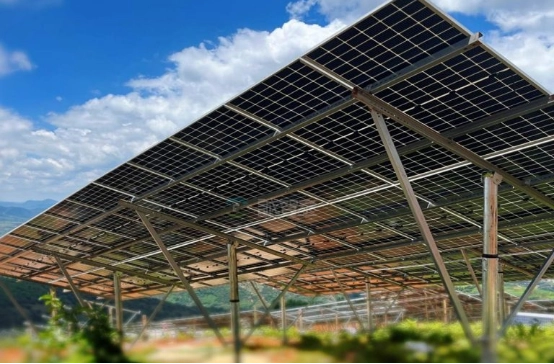
More height means longer columns, higher bending demand and sometimes larger foundations. Where wide working areas and fewer intermediate supports are required, a système de montage solaire flexible for agriculture may provide more open space beneath the array.
How Should Row Spacing Be Determined?
Row spacing serves crop production and solar generation. Narrow rows raise PV density. Wider rows improve access and often reduce prolonged shading.
The planting plan and mounting grid should be reviewed on the same drawing.
Start With Crop and Sunlight Requirements
Shade tolerance varies. Leafy crops may accept partial shade better than crops that need strong, even sunlight. A layout that looks open in summer can cast long winter shadows.
Fixed-tilt structures create a predictable pattern. Trackers change it through the day, but moving components introduce more clearance requirements.
The useful question is how much light the crop needs, during which growth stage, and where it must reach.
Add the Required Machinery Working Width
Machine width is only part of the calculation. The implement may be wider than the tractor, and operators do not drive perfectly centered between posts.
Allow for steering correction, tire drift, crop clearance, columns and braces. A 3.0 m cultivator should not be assigned a 3.1 m clear corridor. It fits on paper. It will not work comfortably.
The better layout may use fewer columns, longer spans or a different planting direction. Wider spacing can reduce PV capacity per hectare, but damaged posts and unusable planting strips also carry a cost.
How Can the Layout Provide Safe Farm Machinery Access?
Good access must be continuous. A wide corridor is useless if the entrance is narrow or the tractor cannot turn at the row end.
The layout should be reviewed as a movement path, not isolated dimensions.
Design Around the Machinery Operating Envelope
The operating envelope includes full width, height and swept path while turning or using attachments.
Check:
- Maximum working and transport height
- Width with attachments deployed
- Turning radius and rear overhang
- Clearance from posts and electrical equipment
- Ground variation along the route
On sloping land, the upper side of a machine may move closer to the structure than expected. A cross-section often reveals conflicts hidden in plan view.
Plan Entrances, Headlands and Turning Areas
Headlands usually require more space than straight lanes. Long trailers and mounted implements cut across corners. Gate posts, inverter pads and drainage ditches reduce usable turning space.
Entrances should align with the main travel direction. Avoid diagonal braces beside gates. Protect columns near frequent turning points with barriers or additional setback.
A service truck will not follow the same path as a small tractor.
What Trade-Offs Must Be Balanced in the Final Design?
Agrivoltaic structures sit between agricultural productivity, energy yield, steel weight and foundation cost.
| Design decision | Agricultural advantage | Structural or solar trade-off |
| Higher clearance | Better access below modules | Longer columns and higher wind demand |
| Wider rows | More light and easier movement | Lower PV capacity per hectare |
| Fewer posts | Fewer field obstacles | Longer spans and heavier members |
| Tracking system | Adjustable shade pattern | Moving clearances and more maintenance |
| Fixed-tilt system | Simpler operation | Less control over daily shading |
Maximizing module count can leave narrow strips that nobody can cultivate efficiently. On an agricultural site, those strips are not harmless empty space. They affect planting, weed control, drainage and long-term acceptance by the farm operator.
The structural solution may also need to change. Reducing the number of posts improves machinery movement, but longer beam spans usually require heavier steel. Increasing the table height improves access, yet it also exposes more structure to wind.
The cheapest mounting system per watt is not always the most economical system for the site.
What Should Buyers Provide to an Agrivoltaic Mounting Supplier?
“Tractor access required” is not enough for structural design.
The RFQ should include the site layout, crop information, module data, machinery dimensions, minimum clearance and required row width. Wind, snow and seismic criteria are essential. So are topography and soil data.
Add irrigation lines, drains, gates, inverter positions and areas where columns are prohibited. Photos help. A short video of machinery operating in the field can reveal more than a generic datasheet.
The machine should be shown with its normal attachments. A tractor without the cultivator, sprayer or trailer provides an incomplete picture.
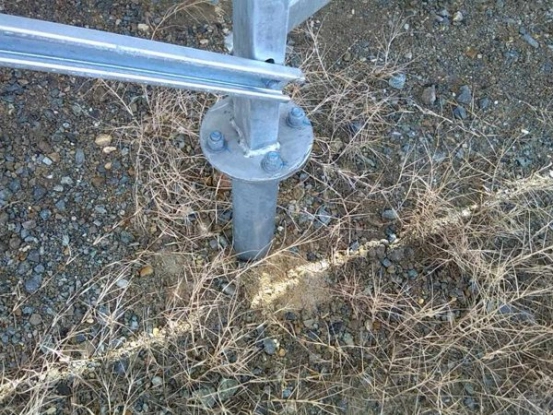
Foundation preferences can be included, although they should not be fixed before the soil conditions are reviewed. Driven piles may be efficient in one field and unsuitable a few hundred metres away where shallow rock appears. A ground screw pile mounting system may reduce wet construction work on suitable sites, although pull-out capacity, installation torque and soil variability still need to be verified.
Clear inputs allow the supplier to adjust column spacing, beam span, bracing, foundations and preassembly details before production.
Conclusion: Design the Structure Around Real Farming Operations
The most workable layouts usually begin with a tractor path, a crop row and a seasonal work plan. The module table comes after that.
Clearance should reflect the highest real operating condition. Row spacing should protect sunlight and usable working width. Entrances and headlands deserve the same attention as the main array.
A structure that generates power but interrupts farming is not a successful agrivoltaic solution. Send CZT Solar your site layout, module specifications and farm machinery dimensions to receive a customized agrivoltaic mounting design proposal.
FAQ
Q: What is the typical clearance for an agrivoltaic mounting system?
There is no single value. Clearance depends on crop height, worker access, machinery operating height, terrain variation and a practical safety margin.
The measurement should be taken from the finished ground level to the lowest structural obstruction, which may be a beam, brace, cable tray or moving tracker component.
Q: How wide should agrivoltaic rows be?
The clear width should accommodate the widest attachment, steering tolerance, crop clearance and structural obstructions. Shading and land-use targets must be checked at the same time.
Nominal row pitch and usable farming width are not the same measurement. Columns and diagonal braces can reduce the actual working corridor.
Q: Can standard ground-mount structures be used for agrivoltaics?
Sometimes, especially for grazing. Mechanized farming often needs taller columns, wider spans and a layout developed around machinery routes.
Standard components may still be used, but the column arrangement, bracing positions and foundation design usually need project-specific review.





 French
  English
  Japanese
  Korean
  Spanish
  Arabic
  Russian
  Thai
Thai