

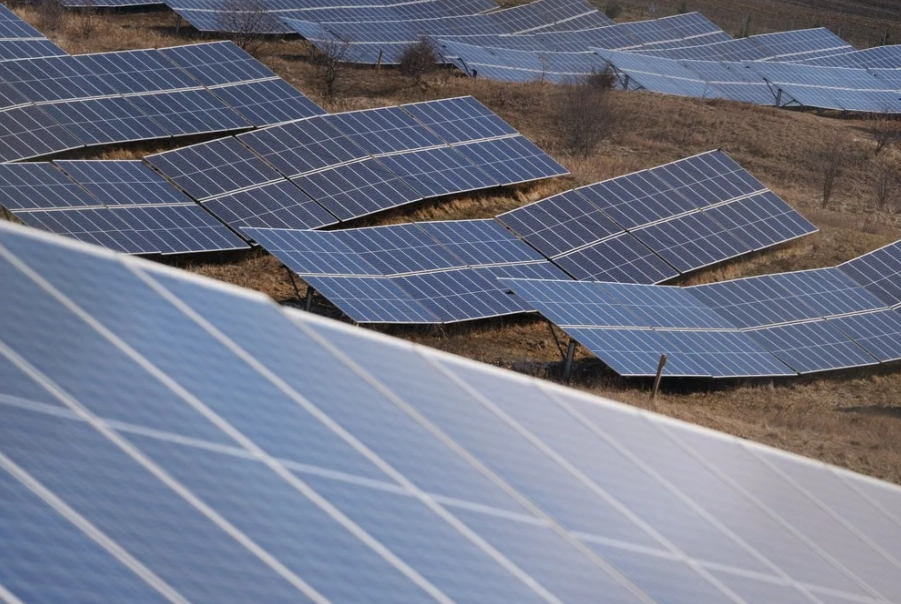
For an EPC contractor, a solar mounting system is not a minor balance of system item. It affects foundation work, module installation, site access, maintenance, and long term structural performance.
A well designed system helps a project stay on schedule. A poor fit can create expensive problems before the first panel is connected. Soil conditions may differ across one site. Wind loads can exceed early estimates. A delivery that arrives with incompatible brackets can stop an installation crew.
Solar ground mounting systems give EPC contractors more layout freedom than rooftop systems. They also require closer coordination between engineering, procurement, and construction. This guide covers the main system types, components, design factors, installation controls, and supplier considerations.
What Are Solar Ground Mounting Systems?
Solar ground mounting systems support photovoltaic modules on a structure fixed directly to the ground. The structure sets the panel angle and orientation. It also transfers wind, snow, and equipment loads into the foundation.
Ground mounted systems are common on utility scale solar farms. They are also used for commercial sites and open land with limited rooftop capacity. Compared with rooftop mounting, they usually provide easier access for maintenance and more flexibility in array layout.
The right system depends on several site details. Soil bearing capacity matters. So do slope, drainage, local wind speed, snow conditions, module dimensions, and available construction equipment. A design that works well on compact soil may perform poorly on loose ground. There is no universal ground mount solution.
Main Types of Ground-Mounted Solar Racking
The system type should match the project’s energy target and construction reality. EPC contractors normally compare fixed structures, tracking systems, and several foundation approaches before selecting a final configuration.
Fixed-Tilt Ground Mounting Systems
Fixed tilt systems hold modules at a permanent angle. Their structure is relatively simple. Fewer moving parts usually mean easier maintenance and predictable installation work.
This design suits many commercial and utility projects where a balance between cost and energy production matters. It can also be a practical choice for remote sites. Crews do not need to install motors, controllers, or tracking drives.
The tilt angle still needs careful engineering. A small change can affect row spacing, shading, wind exposure, and annual generation. Module orientation matters as well. A portrait layout may require a different rail arrangement from a landscape layout.
Single and Dual Axis Tracking Systems
Tracking systems move the array to follow the sun. Single axis trackers usually rotate along one axis. Dual axis trackers adjust in two directions and can capture more direct sunlight in suitable conditions.
The extra energy yield can be attractive on large projects. It is not automatically the best commercial decision. Tracking equipment adds motors, controls, wiring, and maintenance points. The site must also provide enough clearance for movement.
A flat, accessible site may support tracking well. A complex terrain with frequent service limitations may favor fixed tilt. EPC teams should compare expected production gains with capital cost, maintenance labor, and replacement requirements.
Pile-Driven, Concrete, and Ballasted Foundations
Foundation choice starts with geotechnical information.
Pile-driven foundations can be installed quickly when soil conditions allow adequate penetration. They often reduce concrete work and shorten site preparation. Refusal is a real risk, though. Hard layers or buried rock can change the installation plan.
Concrete foundations offer a stable option for difficult ground or higher load requirements. They require excavation, curing time, and more site logistics.
Ballasted systems use weight instead of deep penetration. They can be useful where excavation or pile driving is restricted. Their design must account for sliding, overturning, drainage, and transportation of ballast materials.
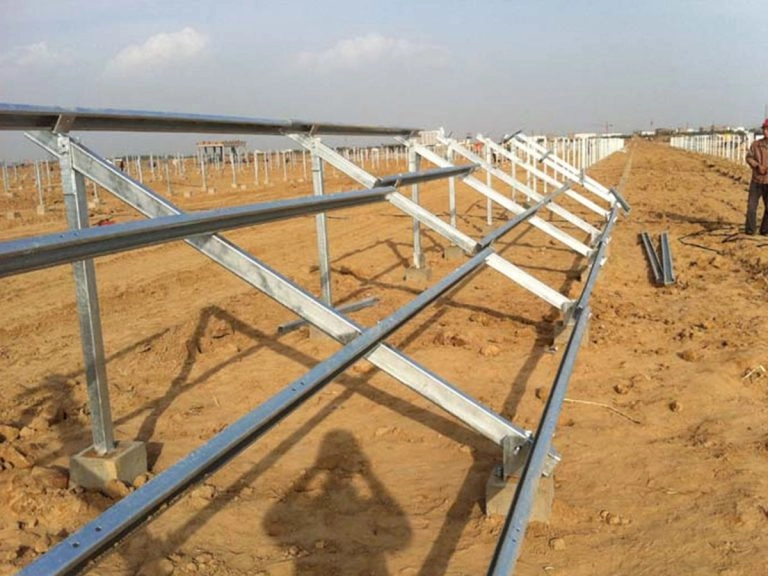
Key Components of a PV Ground Mounting System
A ground mounting system works as one structure. Every component has a load path and a role in installation.
- Posts, piles, or foundation supports transfer structural loads into the ground.
- Beams and rails form the main framework for the modules.
- Module clamps hold panels in position without damaging their frames.
- Brackets and connectors join structural members and allow controlled adjustment.
- Fasteners maintain joint strength under vibration and weather exposure.
- Bracing and reinforcement improve resistance to wind, snow, and seismic loads.
- Metal structural components provide the custom parts needed for specific layouts.
Compatibility is critical. Hole patterns, rail dimensions, clamp ranges, and fastener grades must match. When several vendors supply separate parts, small inconsistencies can become installation delays. A one stop supplier can simplify that coordination.
How EPC Contractors Should Design a Ground-Mounted Solar Project
Good design begins at the site, not in a product catalog.
A survey should record soil type, slope, elevation changes, drainage, flood exposure, and access routes. Construction equipment needs room to reach each foundation point. A site that looks open on a map may become difficult after heavy rain.
Environmental loads must be calculated for the actual location. Wind speed, snow load, seismic conditions, and corrosion exposure all influence member sizes and foundation depth. Coastal air, for example, can place greater demands on corrosion protection.
The module package also affects the structure. Confirm panel dimensions, weight, frame geometry, orientation, row spacing, and tilt angle. An extra long module may change rail spans. A revised panel model can require different clamps.
Engineering should include cable routing and maintenance paths. Do not leave these decisions until installation. Access gaps that appear generous in a drawing can feel narrow once modules and equipment are in place.
Local building codes and land use rules must be checked as well. Early coordination prevents redesign and procurement changes. That is where a few hours of engineering review can save weeks on site.
Installation and Quality Control Considerations
A typical installation starts with surveying and site preparation. Crews then install piles or foundations. Posts, beams, rails, and braces follow. Modules are placed after the structure is aligned.
Quality checks should happen during the work. Verify foundation position and embedment depth. Check member dimensions and coating condition. Confirm that fasteners match the approved specification. Torque inspections matter. So does final row alignment.
On a sloping site, a small foundation error can accumulate across a long row. The last few modules may no longer sit correctly. Regular surveying catches that issue early.
EPC contractors should request structural drawings, installation instructions, load calculations, material documentation, and inspection records from the supplier. Price matters. Rework costs more.
How to Choose a Solar Mounting System Supplier
A suitable supplier should support the complete project rather than only ship loose metal parts.
Review the supplier’s product range. Can it provide a complete ground mounting system and related metal structural components? Ask about engineering support, customization, manufacturing control, documentation, packaging, and delivery planning.
Communication is a practical test. Technical questions should receive clear answers. Drawings should reflect the actual project. Changes to module dimensions or foundation design should be handled through a controlled process.
EPC contractors should also examine total supply chain risk. Fewer supplier interfaces can simplify procurement and reduce compatibility issues. The lowest unit price is not always the lowest project cost.
Why Work With CZT Solar for Ground Mounting Projects?
CZT Solar presents a one stop supply model for photovoltaic mounting systems and metal structural components. For EPC contractors, that can reduce the number of separate vendors involved in one installation package.
A coordinated supply route may make it easier to align rails, brackets, clamps, fasteners, and customized structural parts. It can also simplify technical communication when a project has unusual terrain or module requirements.
Frequently Asked Questions
Q: What is the best foundation for a ground mounted solar system?
There is no single best option. Pile driven, concrete, and ballasted foundations should be selected according to soil conditions, structural loads, local regulations, and installation limits.
Q: Are ground mounted solar panels better than rooftop systems?
Ground mounting can provide easier maintenance access, flexible orientation, and room for larger arrays. It also requires suitable land and additional civil work.
Q: How long do solar ground mounting systems last?
Service life depends on material selection, corrosion protection, structural design, environmental exposure, and maintenance practices.
Q: Can a ground mounting system be customized for different modules and terrain?
Yes. Rail lengths, foundation layouts, tilt angles, and component configurations can be adapted to project requirements.
Conclusion: Build a More Reliable Solar Project From the Ground Up
A reliable ground mounted solar project starts with a suitable foundation and a coordinated structural design. Durable components and disciplined installation controls complete the system.
For EPC contractors, supplier capability matters as much as the product itself.
Contact CZT Solar to discuss the requirements of your next solar ground mounting project.







 Spanish
  English
  Japanese
  Korean
  Arabic
  Russian
  French
  Thai
Thai