

What Are Hot Rolled Steel Shapes and Why Do Dimensions Matter?
What Makes Hot Rolled Steel Different from Other Steel Products?
Understanding the fundamental manufacturing variance between structural components is essential for large-scale engineering. Unlike cold-formed steel profiles that are shaped at room temperature, hot-rolled steel shapes are roll-formed at extremely high temperatures, typically above the steel’s recrystallization point. This high-temperature process allows mills to produce massive, robust sections with high load-bearing capacity. However, the thermal cooling process introduces distinct surface characteristics and slightly broader dimensional variances compared to precision cold-finished options.
Why Standard Dimensions Are Critical for Fabrication and Construction
Consistency is essential in industrial engineering. Standardized structural steel dimensions let engineers design systems with mathematical certainty. Precise cross-sections show how components handle mechanical stress. Without strict international dimensional baselines, structural safety cannot be verified. This risks field integration failures during on-site assembly.
Common Hot Rolled Steel Shapes and Their Standard Dimensions
Standard Sizes for Beams, Channels, and Angles
Heavy infrastructure relies on standardized geometries to distribute stress safely. The H Steel Beam is a core component. It features an optimized “H”-shaped cross-section. This design supports uniform weight distribution and high compressive resistance.
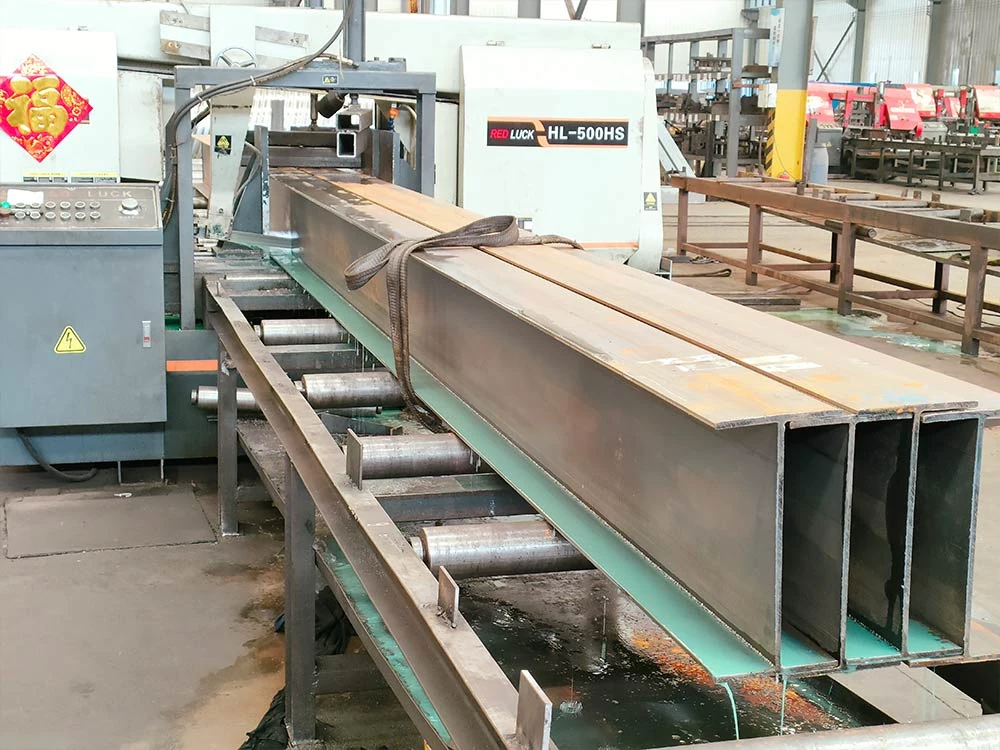
| Parameter | Specification Range |
| Standard | GB/T 11263 |
| Web Height (H) | 100mm – 900mm |
| Flange Width (B) | 100mm – 400mm |
| Thickness (t) | 6mm – 40mm |
Typical Dimensions of Steel Plates, Flats, and Bars
Structural layouts also need flat-rolled plates and connection accessories. These accessories create secure bolting zones. The elements must follow strict nominal thicknesses. This ensures stable frameworks that can withstand extreme environmental conditions.
How Steel Shape Selection Affects Structural Performance
Profile geometry affects how structures resist bending and buckling. The wider flanges of an H-beam give better lateral stability. This makes H-beams suitable for heavy columns and solar mounting systems. Matching steel geometry to expected load directions improves performance and reduces material deadweight.
Understanding Tolerances in Hot-Rolled Steel
What Are Dimensional Tolerances in Steel Manufacturing?
Absolute metallurgical perfection is impossible. Manufacturers define dimensional tolerances as acceptable variations. These variations cover critical measurements such as thickness, width, and straightness. The boundaries ensure that structural parts remain safe and functional despite minor mill deviations.
Common Thickness, Length, and Straightness Tolerances
Tolerance standards set strict parameters for acceptable deviations. For instance, length deviations for standard beams are tightly monitored, ensuring consistency across long multi-span setups. While thickness tolerances vary based on the overall size of the profile, maintaining straightness along the longitudinal axis is critical to avoid cumulative alignment errors during multi-component framing.
Why Hot Rolled Steel Usually Has Wider Tolerances
Hot-rolled profiles contract unevenly during thermal cooling. This creates wider tolerances than cold-processed sections. For tighter constraints, we often suggest cold-formed options such as our C Steel Channel. It offers precise dimensions, quick assembly, and high strength-to-weight ratios for tight framing networks:
- Thickness: 1.5mm – 4.0mm
- Flange Width: 40mm – 100mm
- Height: 50mm – 300mm
Which Standards Define Hot Rolled Steel Dimensions?
ASTM Standards Commonly Used for Hot-Rolled Steel
The American Society for Testing and Materials (ASTM) defines widely recognized structural baselines. ASTM standards govern precise dimensions and mechanical capabilities. These are required for heavy civil engineering applications.
EN and JIS Standards in International Projects
European and Asian projects require EN and JIS criteria. At CZT solar, our international team ensures full compliance with ASTM, DIN, JIS, and GB standards. We adapt production lines to satisfy the exact regional codes of our global clients.
How Buyers Can Compare Different Steel Standards
Global procurement requires evaluating equivalent grades and cross-sections. Matching Chinese GB carbon steel grades such as Q235B or Q345B with international equivalents ensures that substituted profiles keep the same safety margins and load capacities.
How to Choose the Right Hot Rolled Steel Dimensions for Your Project
What Should Buyers Check Before Ordering?
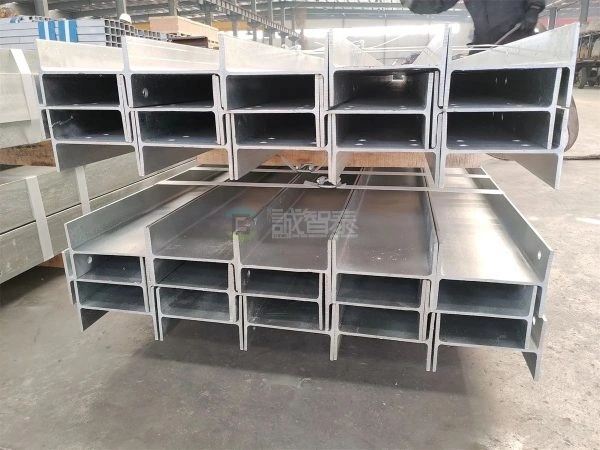
Buyers must verify nominal sizes, cross-sectional thickness, and required surface treatments. For harsh environments, specifying hot-dip galvanized steel prevents premature oxidation. This treatment also extends service life.
How Load Requirements Influence Steel Shape Selection
Environmental pressures determine profile needs. Heavy utility structures must withstand extreme forces. We engineer our CZT solar ground mounting foundations to handle wind loads up to 216 km/h and snow loads up to 1.4 kN/m². This requires robust structural profiles.
How Incorrect Dimensions Increase Processing Costs
Procuring out-of-spec elements incurs severe financial penalties. If incoming shapes exceed tolerance limits, contractors face extensive on-site re-work, field cutting, or specialized welding. This increases labor costs and may delay project timelines.
Common Problems Caused by Poor Steel Dimensional Accuracy
What Happens When Steel Shapes Exceed Tolerance Limits?
Exceeding tolerances triggers critical issues. Excessively thin webs reduce overall structural integrity. This lowers resistance to heavy compression. Overly thick parts introduce unexpected deadweight. This deadweight can threaten foundational stability.
Fabrication and Installation Issues Caused by Inconsistent Dimensions
In complex installations such as utility solar farms, minor variances can ruin pre-drilled connection points. When multi-span frameworks suffer from cumulative dimensional drift, modular connecting brackets may fail to align. This can stop installation.
How Manufacturers Reduce Dimensional Variations
To guarantee dimensional precision, CZT solar uses a 28,000 square meter industrial plant. Our cold-formed workshop runs 25 roll-forming and 15 punching lines under a strict 6S management system. For custom structural needs, we integrate high-precision CNC laser cutting. This helps meet exact specifications.
FAQ
Q: What are the primary structural steel dimensions required for high-capacity framing?
A: High-capacity frameworks utilize heavy profiles like the H Steel Beam. These beams have web heights of 100mm–900mm and flange widths of 100mm–400mm. The dimensions ensure uniform stress distribution.
Q: Why do hot-rolled steel shapes feature broader tolerance parameters than cold-formed alternatives?
A: Hot-rolled sections are molded at extreme temperatures. This causes uneven thermal contraction upon cooling. Cold-formed profiles, like the C Steel Channel, are shaped at room temperature to exact thicknesses of 1.5mm–4.0mm.
Q: How do precise steel beam standard sizes safeguard utility field safety?
A: Accurate profile sizes guarantee the necessary structural integrity and load-bearing capacity against dynamic forces. CZT solar configures profiles to reliably resist extreme wind loads of up to 216 km/h.
Q: What critical parameters belong in comprehensive steel channel specifications?
A: A specification sheet must include profile height, flange width, material thickness, length, and surface treatment. One example is hot-dip galvanized steel. This treatment helps prevent corrosion.
Q: How can buyers verify dimensional tolerances when sourcing materials globally?
A: Buyers should demand compliance with ASTM, EN, JIS, or GB codes. At CZT solar, we enforce strict QC protocols. These protocols include dye penetrant testing and dimensional inspections. They ensure shipments match engineering blueprints.






 English
  Japanese
  Korean
  Spanish
  Arabic
  Russian
  French
  Thai
Thai