

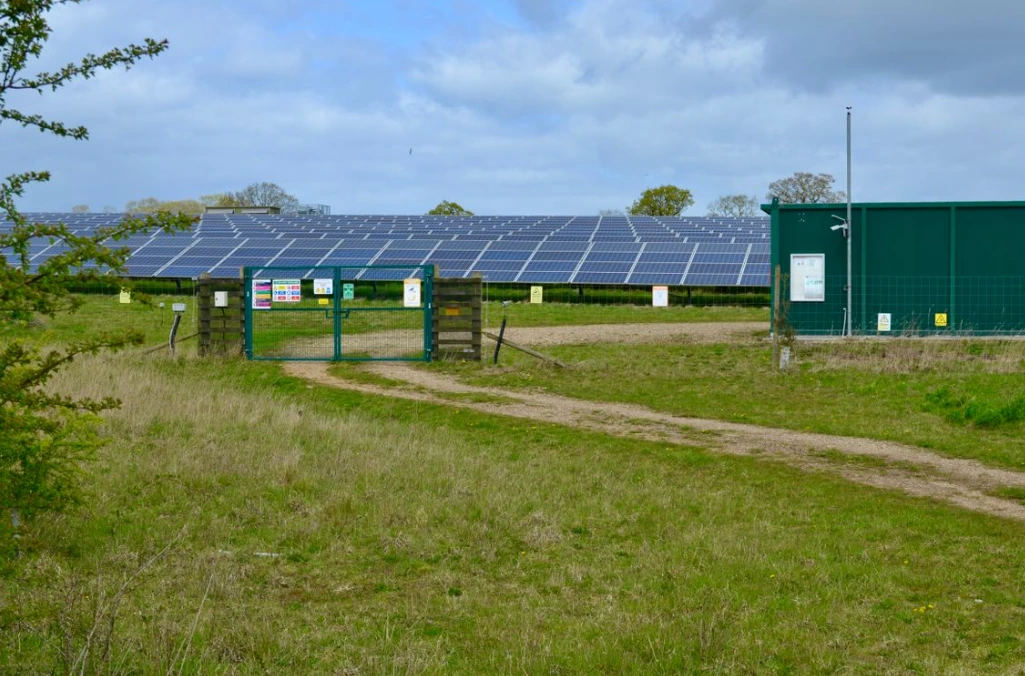
A rooftop mounting system looks simple from the ground. On the roof, details become practical. Rail length affects handling. Bracket position affects alignment. A small error repeated across forty modules becomes obvious at the end of the row.
Rail-based and rail-less solar mounting systems can both produce reliable arrays. The better choice depends on the roof, module frame, loads, installation crew, and supply method. Material price matters, but it is rarely the whole story.
What Is a Rail-Based Solar Mounting System?
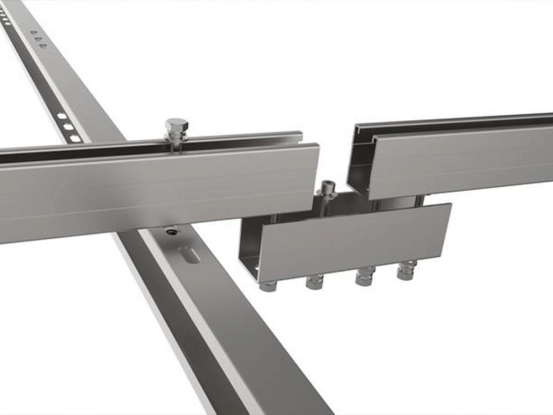
A rail-based solar mounting system uses continuous aluminum or steel rails beneath the modules. Roof attachments connect the rails to rafters, purlins, standing seams, or other structural points. Mid clamps and end clamps secure the module frames.
Rails provide a clear reference line, and module positions can be adjusted before final tightening. That helps on roofs that are not as straight as the drawings suggest.
The trade-off is volume. Rails must be transported, lifted, cut, joined, aligned, and bonded. Long pieces are awkward around skylights. Offcuts are common where array dimensions do not match standard rail lengths.
What Is a Rail-Less Solar Mounting System?
A rail-less solar mounting system removes the long continuous rails. Modules connect directly to compact roof mounts, seam clamps, short supports, or module-to-module brackets. In some designs, the module frame becomes part of the structural load path.
Rail-less does not mean measurement-free. Brackets must be positioned accurately because there is less room for correction. Module dimensions, approved clamp zones, roof profile, and attachment spacing should be confirmed before installation.
An experienced crew can move quickly. A crew using approximate dimensions may spend hours correcting a row that has drifted out of square.
Rail-Based vs. Rail-Less Solar Mounting Systems
| Factor | Rail-Based System | Rail-Less System |
| Main structure | Continuous rails support modules | Modules connect to compact mounts |
| Component count | Generally higher | Generally lower |
| Installation | Familiar and adjustable | Faster when accurately planned |
| Material use | More rail material required | Less material and lower shipping volume |
| Alignment | Easier to adjust on site | Requires precise mount positioning |
| Roof load | Higher system weight in some designs | Often lighter |
| Module compatibility | Usually highly flexible | Must confirm module and clamp compatibility |
| Maintenance | Components are easy to identify | Access may depend on system configuration |
Installation Time and Labor
Rail-less systems remove rail positioning, splicing, and cutting. That is useful on large metal roofs with hundreds of identical attachment points.
The saving is not automatic. Roof access, module staging, crew experience, and layout accuracy still control the schedule. On one warehouse roof, moving six-meter rails around skylights caused more delay than fastening the modules. On another roof with uneven purlin lines, rails gave the crew enough adjustment to keep the array straight.
Material and Transportation Costs
Rail-less mounting usually reduces raw material and shipping volume. This matters in export projects, where long rails use container space inefficiently.
The correct comparison is total installed cost. Include fasteners, packaging, lifting, rail waste, labor, grounding hardware, and rework. A system that saves aluminum but requires repeated measurements may not save money.
Adjustment and Installation Tolerance
Rails provide a continuous surface for alignment. Installers can slide clamps and compensate for minor roof variation.
Rail-less systems need better survey data. Attachment spacing must match module geometry and structural requirements. Clamp positions must remain inside the manufacturer’s approved zones. A repeated 10 mm error across a long row is not minor.
Installation drawings should show coordinates, roof references, module gaps, and tolerances. Crews need information that works on the roof—not drawings prepared only for approval.
Which System Is Better for Different Roof Types?
Roof type usually narrows the decision faster than a general cost comparison. The attachment method comes before the rail question.
Trapezoidal and Standing-Seam Metal Roofs
Rail-less systems are often well suited to trapezoidal sheet and standing-seam roofs. Compact brackets can connect to the roof profile, while compatible seam clamps may avoid penetrations.
Seam shape, sheet thickness, coating, pull-out resistance, and purlin position must be checked. Two similar-looking roofs may require different clamps. Rails still make sense where leveling is needed or attachment points cannot follow the preferred module spacing.
Similar attachment decisions can be seen across different commercial rooftop solar projects, although each roof still requires its own structural review.
Tile and Asphalt Shingle Roofs
Rail-based systems are common on tile and shingle roofs because hooks, flashing, and structural attachments create fixed connection points. Rails bridge between them and provide adjustment.
Waterproofing deserves more attention than installation speed. Attachments should connect to suitable structural members, not only to roof covering material.
Flat Commercial Roofs
Many flat roofs use ballasted or low-tilt systems rather than conventional pitched-roof mounting.
The main questions are ballast weight, membrane protection, wind uplift, drainage, row spacing, and roof capacity. Penetrating attachments may be needed near edges or in high-wind zones.
Calling every flat-roof system rail-less is not useful. The load path matters more than the label.
Structural and Safety Factors to Consider
A mounting system should be selected after checking project loads. Wind uplift is often the governing condition on exposed commercial roofs. Snow load, roof capacity, attachment pull-out strength, and module clamp zones follow closely.
Coastal roofs need careful material pairing. Aluminum rails, coated steel brackets, stainless fasteners, and roof sheets may create galvanic issues if isolated poorly. Drainage paths should remain open, and thermal movement needs space.
Grounding and bonding must match the system. Rail-less arrays may require bonding jumpers or listed module-to-module connections.
A layout that works structurally but damages the roof membrane is not a successful design.
Rail-Based or Rail-Less: How Should You Choose?
Choose a rail-based system when the roof needs leveling adjustment, the array has irregular geometry, or the installation team values a familiar process. Rails also help when module dimensions may change during procurement.
Choose a rail-less system when the roof profile is repetitive, module specifications are fixed, shipping volume matters, and the crew can work from accurate setting-out drawings.
Neither system is universally better. On clean, repetitive roofs, rail-less mounting can be efficient. On uncertain roofs, rails provide useful tolerance. In engineering work, tolerance is not waste. It is often insurance.
How CZT Solar Supports Rooftop Solar Projects
CZT Solar provides rooftop mounting brackets, module clamps, bolts, nuts, connectors, and customized metal components. Recommendations can be developed around roof type, module dimensions, location, environmental loads, corrosion conditions, and installation preferences.
The objective is to supply a system that fits the structure, installation method, and budget without creating unnecessary work on site.
Conclusion
Rail-based systems offer adjustment and broad module compatibility. Rail-less systems reduce long components and can lower handling, freight, and installation effort.
The roof usually decides more than the brochure. Check the attachment method, structural loads, clamp zones, corrosion environment, and installation tolerance. Then compare total installed cost—not only kilograms of aluminum or the number of brackets in a carton.
Planning a rooftop solar project?
Contact CZT Solar for a customized mounting system proposal and provide the roof drawings, profile dimensions, purlin spacing, module datasheets, array layout, and applicable standards.
Frequently Asked Questions
Q: Are rail-less solar mounting systems safe?
Yes, when the system is engineered for project loads and installed with compatible, tested components. Attachment strength, clamp zones, wind uplift, grounding, and waterproofing still need verification.
Q: Is rail-less solar mounting cheaper than rail-based mounting?
It can be. Savings may come from lower material use, smaller packaging, reduced freight, and fewer installation steps. The result depends on roof geometry, labor cost, survey accuracy, and rework risk.
Q: Can rail-less mounting be used on every roof?
No. Some roof profiles do not suit direct mounting, and some projects need the leveling flexibility provided by rails. Roof structure, attachment spacing, and module compatibility should be checked.
Q: Which system is better for commercial metal roofs?
Rail-less mounting is often attractive on large, repetitive metal roofs. Rail-based systems may be better where the roof is uneven, the array layout is complex, or module positioning needs more adjustment. Both can work well when the attachment design is correct.







 Korean
  English
  Japanese
  Spanish
  Arabic
  Russian
  French
  Thai
Thai