
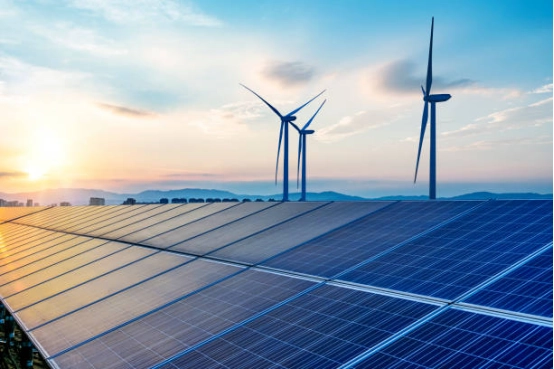
The growth in electricity consumption brought about by AI data centers is driving more enterprises and the power grid to accelerate the development of large-scale solar projects. The IEA pointed out that global data center power demand will grow by 17% in 2025, and AI-focused data centers will grow even faster; by 2030, global data center power consumption is expected to approximately double to 945 TWh.
Large energy users are no longer talking about renewable power only as a carbon target. They are asking how fast a solar project can be built, how stable the output can be, and whether the structure design can survive decades of operation without creating maintenance trouble.
Why AI Data Centers Need More Renewable Power
Servers run day and night. Cooling systems keep working. Backup systems stay ready. Once the computing capacity grows, the electricity demand rises quickly. That creates pressure on grids, utilities, developers, and land planners. Renewable power is not the whole answer, but it has become a serious part of the answer.
Higher electricity demand:
AI computing requires dense, stable, and continuous power. A single data center campus may need a level of electricity that changes the planning of an entire local grid.
Stronger sustainability pressure:
Data center operators also face public and investor pressure. A new AI facility may bring jobs and infrastructure, but it also raises a simple question: where will the power come from?
Faster project timelines:
Data center projects usually move fast. Energy supply has to keep pace, or the whole schedule becomes difficult.
How Utility-Scale Solar Supports AI Data Center Expansion
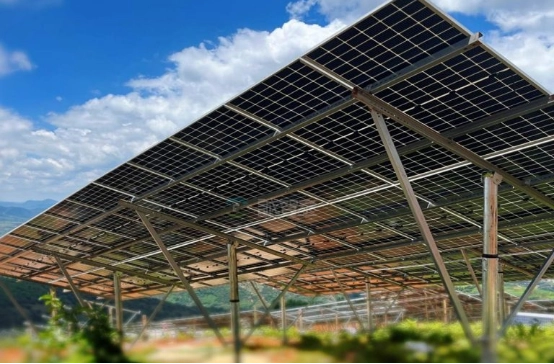
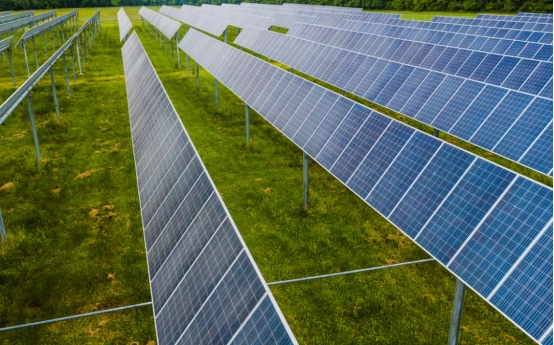
AI data centers do not need small, symbolic energy projects. They need serious capacity. A well-planned solar farm can support part of that long-term demand, especially when combined with storage, substations, and grid supply.
Electricity cost is a daily operating issue for data centers. A large solar project can help reduce exposure to unstable power prices. Solar is also easier to combine with modern energy infrastructure. Battery storage, transformers, substations, and grid-side planning can all be considered during project design.
Why Mounting Systems Matter in AI-Driven Solar Projects
On paper, solar modules usually get the attention. On site, mounting systems decide whether installation is smooth or painful.
Steel structures are not the most exciting part of a solar farm. But they carry the system, face the weather, and repeat across thousands of rows. One weak detail repeats too.
Faster Installation Reduces Project Risk
A good PV mounting system helps installers work faster. Hole positions should match. Clamps should fit. Bolts should be complete. Components should arrive in a logical order.
When a crew stops because a bracket detail is unclear, the project loses time. On a utility-scale site, even a small mistake can spread across many rows. For data center-driven solar projects, schedule risk is often more serious than people expect.
Solar Tracking Systems Improve Energy Yield
Solar tracking systems can increase energy generation by allowing modules to follow the sun. For high-load users such as AI data centers, that extra output may be worth the added engineering.
Trackers, however, are not just moving frames. They need accurate foundations, stable drive systems, wind protection logic, and enough space for maintenance. A tracking bracket should look simple only after the engineering work has been done properly.
Durable Metal Structures Support Long-Term Operation
Utility-scale solar projects are built for decades. Heat, rain, dust, snow, wind, and corrosion will keep testing the structure.
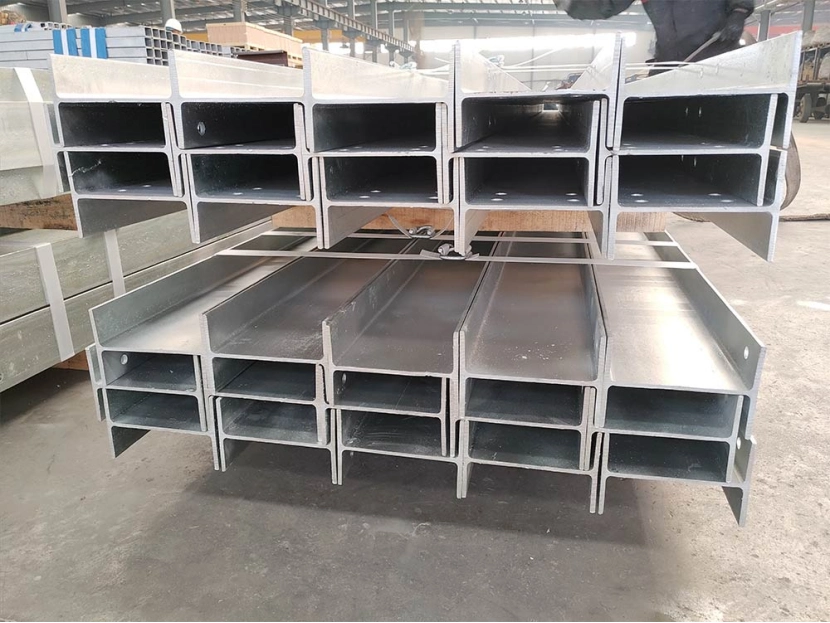
This is why material selection matters. Galvanized steel, Zn-Al-Mg steel, reliable fasteners, and proper surface treatment are not decoration. They decide how much maintenance the project may need later.
Key Design Considerations for Data Center Solar Projects
Data center-related solar projects should not be designed as ordinary ground-mounted projects with a new label. The energy demand is different. The schedule pressure is different. The expectations are higher.
Several design points need attention before procurement moves too fast.
Land and Foundation Conditions
Soil condition, slope, wind load, snow load, flood risk, and corrosion environment all affect mounting system design.
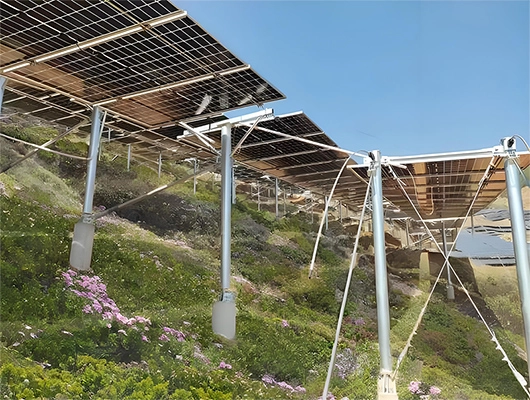
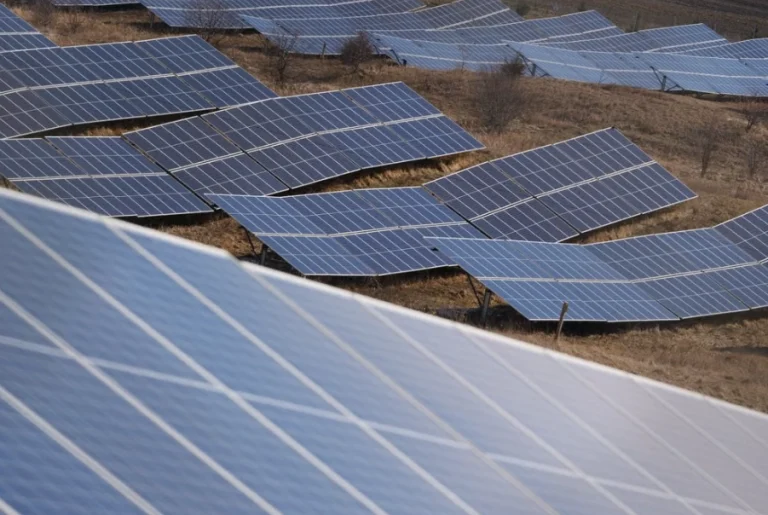
A fixed ground mounting system may work well on stable open land. Flexible mounting structures may suit more complex terrain. Tracking systems need stricter alignment. Guessing at this stage is expensive.
Energy Yield Requirements
If the project needs higher generation from limited land, solar tracking systems may be considered. If the site has enough land and the budget is more conservative, fixed mounting may be better.
There is no single correct answer. The right choice depends on irradiation, land cost, load demand, construction budget, and operation strategy.
Construction Efficiency
Prefabricated parts and standardized accessories reduce site work. This sounds simple, but it matters a lot.
A clean structure design allows crews to repeat the same installation action across many rows. Repetition is where utility-scale projects gain speed. It is also where bad design creates trouble.
Long-Term Maintenance
Maintenance access should be planned early. Enough space for inspection, easy bolt checking, drainage around foundations, and clear replacement methods all help reduce future cost.
A solar farm serving AI power demand cannot afford frequent structural problems. Stable output depends on quiet, boring reliability.
How CZT solar Supports Utility-Scale Solar Development
CZT 태양 works as a one-stop PV mounting system provider, with products covering fixed PV brackets, tracking brackets, flexible brackets, photovoltaic carports, BIPV systems, ground mounting systems, roof mounting systems, and related bracket accessories.
One-Stop PV Mounting System Supply
A one-stop supply model can simplify design communication, procurement, production planning, and delivery control. For large projects, this is useful. Fewer supplier gaps usually mean fewer drawing conflicts and fewer site adjustments.
Not every solar site is flat and easy. Some projects need custom pile designs. Some need higher clearance. Some need special corrosion protection or different module layouts. CZT solar can support project-specific mounting structure requirements based on site conditions and project goals.
AI data center energy planning may involve large ground-mounted solar farms, rooftop systems, carports, or BIPV structures. Different applications need different structures. CZT solar’s product coverage gives developers more flexibility when planning solar power around infrastructure demand.
Conclusion
AI data centers are changing how large solar projects are planned. Power demand is growing fast, and clean energy is becoming part of basic infrastructure decisions.
For utility-scale solar projects, the mounting system is no longer a background item. It affects construction speed, energy yield, structural safety, and long-term maintenance. Developers and EPC contractors who treat PV structures as serious engineering components will have fewer surprises on site.
CZT solar can support this new development cycle with fixed mounting systems, solar tracking systems, flexible brackets, BIPV structures, and customized metal components for different solar project conditions. Contact CZT Solar for a customized installation system solution.
자주 묻는 질문
Q1: Why are AI data centers accelerating utility-scale solar development?
AI data centers need large amounts of stable electricity, so developers are using utility-scale solar to support long-term power planning and lower carbon pressure.
Q2: Are fixed PV mounting systems suitable for data center solar projects?
Yes. Fixed PV mounting systems are suitable when land is available, site conditions are stable, and the project needs controlled investment with reliable operation.
Q3: When should solar tracking systems be used?
Solar tracking systems are useful when higher energy yield and better land use are important, especially for large projects serving high power demand.
Q4: Why is the mounting system important in utility-scale solar projects?
The mounting system affects installation speed, foundation design, wind resistance, maintenance cost, and the long-term stability of the whole solar farm.





 Korean
  English
  Japanese
  Spanish
  Arabic
  Russian
  French
  Thai
Thai