

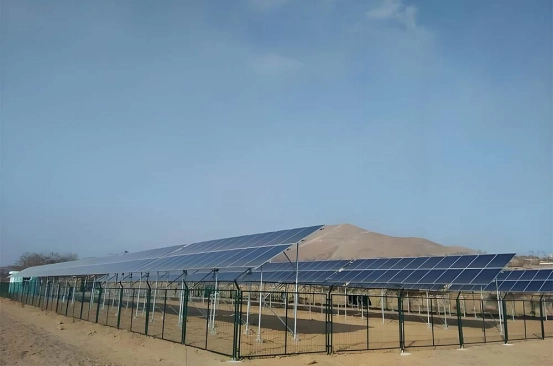
A solar farm fence looks simple on a drawing: posts, mesh, gates, foundations. On site, it becomes part of the security system and maintenance plan. A weak hinge or untreated cut edge can matter more than an impressive material label. What must the fence keep out? What will the environment do to it over twenty years?
What Risks Must a Solar Farm Fence Prevent?
Start with the site risk, not the fence catalog.
Remote plants may face cable theft, vandalism, livestock intrusion, and uncontrolled public access. Near roads, accidental vehicle entry also matters. In coastal areas, corrosion can weaken welds and fasteners before damage is obvious.
A supervised commercial site and an isolated 100 MW plant do not need the same fence. Treating them alike either wastes money or leaves risk unmanaged.
Which Fence Type Best Matches the Required Security Level?
Fence type affects visibility, climb resistance, cutting resistance, and repair. The local threat level should drive the decision.
Chain Link Fencing for Basic Perimeter Control
Chain link fencing is economical, flexible, and easy to install across uneven ground. It suits basic boundary control.
Its weakness is obvious. Large openings can be climbed, while flexible mesh may be cut or pulled apart. Tension wires, stronger posts, and secure bottom fixing help, but only to a point.
For low risk inland sites with patrols, chain link can be reasonable. Around an isolated plant with repeated theft, it is hard to defend.
Welded Wire Mesh for Balanced Security and Visibility
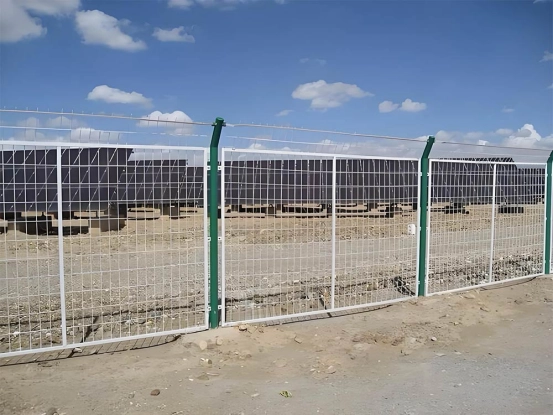
Welded wire mesh panels are rigid and retain their shape under pressure. They provide clear sightlines for cameras, while smaller openings make climbing and tool access harder.
This is practical for many utility scale solar farms. Panels are modular and damaged sections can be replaced. Pay attention to post connections. A strong panel fixed with exposed bolts may still be removed quickly.
Anti-Climb or High Security Fencing for Higher Risk Sites
High security fencing uses narrow mesh, heavier wire, reinforced posts, secure clips, and sometimes top protection. It suits remote sites, substations, battery storage areas, and theft prone locations.
More steel does not automatically mean more security. Gate details, ground clearance, and nearby structures matter. A drainage wall beside the fence can become an unintended climbing point.
Which Material and Coating Provide the Best Corrosion Resistance?
The corrosion system should match the exposure category. Using one coating for dry inland and salt laden coastal sites is usually false economy.
Hot Dip Galvanized Steel for Standard Inland Projects
Hot dip galvanized steel balances strength, cost, and service life inland. Its zinc layer offers sacrificial protection when small areas are damaged.
Coating thickness should be verified. Welds, drilled holes, cut edges, and repaired areas are common weak points. Panels may look sound while brackets rust after two wet seasons.
For standard inland conditions, CZT Solar’s galvanized iron fence configurations can be considered when coating level, wire diameter, post section, and hardware are specified as one system. Good panels paired with untreated accessories still create a weak fence.
Stainless Steel for Coastal or Highly Corrosive Environments
Stainless steel suits salt spray, high humidity, industrial pollution, or aggressive soil. The initial cost is higher, but less coating repair may justify it.
Material grade and compatibility matter. Stainless mesh fixed with unsuitable carbon steel hardware creates weak points. Hinges, bolts, washers, and anchors deserve the same attention as the panels.
CZT Solar also supplies stainless steel solar fence options for projects where corrosion risk carries more weight than initial price.
Duplex Coatings for Additional Protection
A duplex system combines galvanizing with powder coating or PVC coating. It adds a moisture barrier and can improve appearance where planning rules are strict.
It is not a substitute for good detailing. Scratched panels and poorly sealed cut edges can start corroding. On one humid project, panels stayed clean while field cut gate parts rusted within a year. The material was acceptable. The site modification was not.
What Specifications Determine Fence Security and Durability?
Material is only part of the specification. These details often decide performance:
- Panel rigidity and weld quality
- Post size, spacing, wall thickness, and embedment
- Tamper resistant brackets and fasteners
- Foundation design for soil and wind
- Coating repair after drilling or cutting
Avoid copying one post spacing across every project. Wind, soil stiffness, and terrain change the design. Gates deserve separate review because they carry higher loads and move more often.
How Should Climate, Terrain, Wildlife and Array Layout Affect the Design?
Fence choice can affect drainage, vegetation control, patrols, and module shading.
Coastal sites need stronger corrosion protection. Agricultural sites may expose steel to fertilizer, ammonia, irrigation water, or mud. Slopes may require stepped panels or adjustable mesh. High wind sites need suitable foundations and post spacing.
Wildlife creates compromises. Small bottom openings may stop animals but trap debris. Large clearances ease maintenance but allow entry. Gates should align with access roads.
Keep enough distance from the array for inspection and vegetation work. A tall fence too close to low edge modules can produce morning or evening shading.
How Can Buyers Compare Upfront Cost with Lifetime Value?
Price per meter is useful, but incomplete.
| Fence option | Initial cost | Corrosion resistance | Maintenance level | Typical application |
| Chain link galvanized steel | 低 | 適度 | 適度 | Lower risk inland sites |
| Galvanized welded mesh | 中型 | Moderate to high | Low to moderate | General utility scale projects |
| Duplex coated welded mesh | Medium to high | 高い | 低 | Humid or visually sensitive sites |
| Stainless steel fence | 高い | Very high | 低 | Coastal and highly corrosive sites |
A cheaper fence needing repeated coating repair, post replacement, or emergency security work becomes expensive quickly. Repairing 200 meters at a remote site is not a minor task.
What Should Be Confirmed Before Requesting a Solar Fence Quote?
A useful quotation needs more than perimeter length. Provide:
- Total length, height, and fence type
- Wind, terrain, soil, and drainage information
- Security and anti-climb requirements
- Material grade and coating system
- Foundation and grounding requirements
- Drawings, standards, packaging, and delivery schedule
Here, a supplier such as CZT Solar can match galvanized or stainless components to the site and coordinate them with other PV metal structures. The value lies in configuration. A generic product list cannot resolve coastal corrosion or a weak gate layout.
Which Solar Farm Fence Is the Best Choice for Your Project?
Use chain link where basic boundary control is enough. Choose rigid welded mesh where visibility and stronger resistance are needed. Move toward anti-climb systems around higher risk assets.
Match every component to the corrosion environment: panels, posts, bolts, hinges, anchors, and field repairs. Send site conditions and drawings with the inquiry. That is more useful than asking for a standard fence price.
FAQについて
Q: How high should a solar farm fence be?
Height depends on regulations, security risk, terrain, and insurance requirements. Higher risk sites may need anti-climb detailing rather than height alone.
Q: Is galvanized steel suitable for coastal solar farms?
It can be, if the coating system is designed for marine exposure. Standard galvanizing may not provide the required service life. Stainless steel or a specified duplex coating is often easier to justify.
Q: Which fence type is harder to climb?
Narrow aperture welded mesh and anti-climb mesh are generally harder to climb than standard chain-link. Height, top details, and nearby objects still affect the result.
Q: What information should be sent to a solar fence supplier?
Send the location, perimeter length, fence height, security level, corrosion exposure, terrain, wind data, gate requirements, drawings, and applicable standards.





 Japanese
  English
  Korean
  Spanish
  Arabic
  Russian
  French
  Thai
Thai