

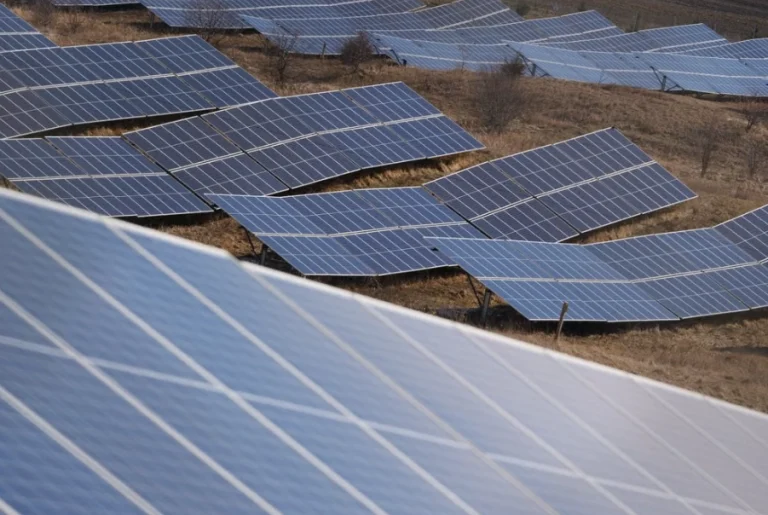
A solar array may look light, but its foundations repeatedly transfer wind uplift and lateral load into the ground. Poor soil information makes that load path uncertain. Posts refuse early. Rows settle unevenly. Steel consumption exceeds the estimate.
Good solar mounting structure design starts below grade. Soil affects the foundation concept and installation method. It also guides corrosion protection. Wind and snow remain governing inputs.
Why Soil Conditions Matter in Solar Mounting Structure Design
Dead load acts downward. Wind can reverse that action within seconds and pull a post upward. Lateral load also creates bending near ground level. The soil must provide bearing without unacceptable movement. It must also resist uplift and lateral action.
Weak resistance rarely starts with a dramatic failure. A few posts settle. Module edges lose alignment. Tracker bearings begin to bind.
A standard foundation may appear economical. If it ignores the ground, that saving is fragile. The solar ground mounting system must match both structural loading and the soil profile.
What Should Be Checked Before the Structure Is Designed?
A useful geotechnical report identifies soil layers and design parameters for bearing and settlement. Density matters in sand. Moisture sensitivity matters in clay. Fill needs special attention because its placement history may be unknown.
Groundwater readings should reflect seasonal change where possible. Soil pH and resistivity help define corrosion exposure. The site review should record frost depth and drainage. It should also map erosion paths and buried services. Shallow rock needs attention too.
Boreholes reveal stratigraphy. SPT or CPT data adds resistance information. Laboratory work refines the parameters. Trial foundations then answer the practical question: how does the proposed pile behave with the actual installation method? Pull-out and lateral load tests provide that evidence.
Preliminary data supports budgeting. Final dimensions require qualified geotechnical and structural review under local rules.
How Different Soil Conditions Change Mounting and Foundation Design
Soil labels are only a starting point. Two sites described as “sand” can behave differently because their density and groundwater differ. Measured behavior should drive the response.
Loose or Sandy Soil
Loose sand may offer limited lateral and uplift resistance. It can also erode where runoff crosses a row. Deeper embedment or a different pile section may work. Disturbed areas may need compaction.
A pile that installs quickly is not automatically adequate. If pull-out movement develops early, more steel above ground will not fix it.
Expansive or Shrinkable Clay
Expansive clay moves as moisture changes. Dry-season shrinkage can open gaps around a post. Wet-season swelling may lift shallow foundations. Drainage is part of the structural response, not landscaping.
Foundations may need to extend below the active zone. Connections should tolerate the movement defined by the engineer.
Soft Clay, Organic Soil or Uncontrolled Fill
These materials raise concern about bearing and differential settlement. A shallow concrete pad can still move with the weak layer beneath it. Longer piles may reach competent soil. Other sites justify removing or improving the poor material.
Variation is difficult. One row crossing an old drainage channel can settle while adjacent rows remain straight. Extra investigation there is cheaper than correcting a finished array.
Rocky Ground or Shallow Bedrock
Rock offers strong support but difficult installation. Driven posts may stop far above design depth. Repeated hammering can damage the post head without improving capacity.
Pre-drilled piles or rock anchors are common responses. Ground screws suit some profiles. The choice depends on rock quality and fracture pattern as well as equipment access. Compare solar foundation options after trial installation.
High Groundwater, Frost and Chemically Aggressive Soil
High groundwater can weaken soil and destabilize excavation. It also keeps buried steel wet. In cold regions, frost-susceptible soil can heave. Foundation depth and drainage must reflect the local frost regime.
Aggressive soil needs a corrosion review. Design life cannot be inferred from a coating name. Chemistry and coating thickness matter. So do cut edges and installation damage. Galvanized steel or Zn-Al-Mg coated steel may suit the exposure when properly specified.
Turning Soil Data into Practical Design Decisions
Geotechnical findings matter when they change drawings and construction plans.
| Soil or Site Factor | Main Project Risk | Possible Design Response |
| Low bearing capacity | Settlement | Deeper foundations or soil improvement |
| Low uplift resistance | Foundation pull-out | Greater embedment or a verified alternative |
| Expansive clay | Heave and misalignment | Drainage and movement-tolerant detailing |
| Shallow rock | Installation refusal | Pre-drilling or rock anchoring |
| High groundwater | Corrosion and instability | Drainage and exposure-appropriate protection |
| Frost-prone soil | Seasonal movement | Design below frost depth where required |
The same data influences spacing and embedment. It may change bracing or connections. Suitable steel channels need capacity for the verified support condition. Installation tolerances and machinery belong in the review. A detail that cannot be built consistently is not sound.
The Cost of Ignoring Soil Conditions
Ground uncertainty reappears as construction cost. Early pile refusal brings drilling equipment and revised details. Weak layers need longer posts or remedial foundations. Unplanned groundwater slows excavation. The impact soon leaves the foundation budget.
Overdesign also costs money. Applying the worst borehole result across a large site adds steel and installation time. A sound investigation divides the site into defensible ground zones. Design can then follow actual variability instead of one standard post.
A Pre-Design Checklist for EPC Contractors and Developers
- Complete the topographic survey and geotechnical investigation.
- Confirm wind and snow loads. Include seismic load where applicable.
- Review groundwater and drainage. Check frost and corrosion exposure.
- Perform site-specific pile or foundation tests.
- Coordinate foundation design with structure and installation methods.
- Confirm compliance with local codes and permit conditions.
- Request a project-specific proposal rather than a standard configuration.
Build a Site-Specific Solar Mounting Solution with CZT Solar
Foundation work is easier when the structure and fabricated components are considered together. CZT Solar combines PV support development with production and project service. Fixed ground systems or tracking structures can be coordinated with steel channels and customized metal parts.
For a useful proposal, provide the site location and module layout. Include design loads and the geotechnical report. Project capacity and schedule also matter. Send the package to the project consultation team to discuss a site-specific mounting proposal. Final details remain subject to local engineering approval.
Frequently Asked Questions
Q: Which soil is best for a ground-mounted solar system?
Dense granular soil or competent stiff soil often provides predictable resistance. No soil is universally “best.” Uniformity and drainage may matter more than its name.
Q: Can foundation type be selected without a geotechnical report?
A preliminary concept can support pricing. Final selection without site data carries avoidable risk. Use a suitable investigation plus field testing of the proposed foundation.
Q: Does rocky ground always require concrete foundations?
No. Pre-drilled piles and rock anchors may be more practical. Ground screws suit some fractured profiles. Test results and local requirements decide the method.






 Japanese
  English
  Korean
  Spanish
  Arabic
  Russian
  French
  Thai
Thai