
Engineering Advantages of Flexible Solar Mounting Structures
The shift toward flexible solar mounting structures isn’t just a trend; it’s a necessary evolution for the industry. Traditional rigid systems, while reliable on flat ground, hit a wall when faced with the chaotic geometry of natural landscapes.
How Do Flexible Systems Overcome Traditional Rigidity?
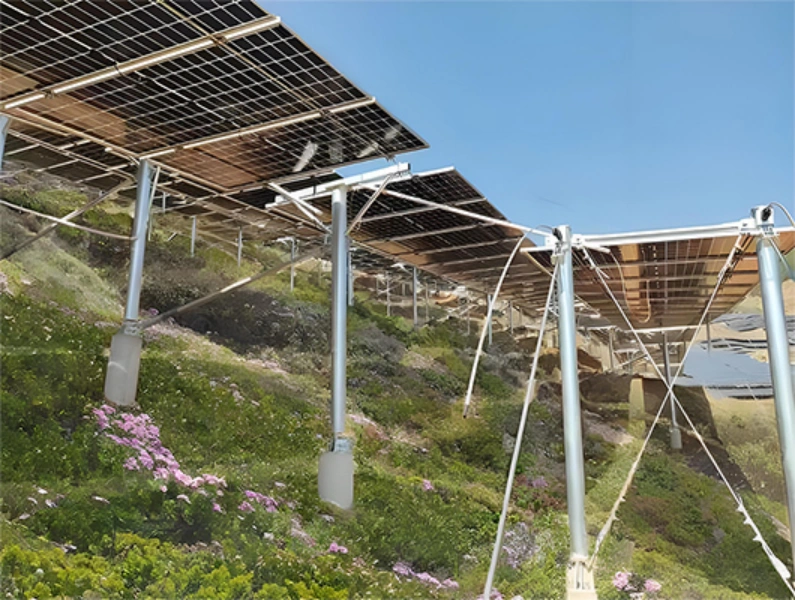
Rigid racks rely on heavy H-beams or C-purlins to fight against environmental forces. Flexible systems take a different path. This structure uses prestressed steel cables tensioned between two fixed points, which are supported by rigid structures and external inclined steel strands at the ends to provide reaction forces. By replacing heavy steel beams with high-strength steel cables, we significantly reduce the dead weight of the material.
The engineering logic here is sound: long-span designs minimize the number of ground foundations required per megawatt. Instead of driving a pile every few meters, you span the distance. To handle the elements, adaptive tensioning mechanisms allow the structure to absorb wind loads and environmental stress, much like a suspension bridge. It’s about working with the wind rather than just trying to block it.
Structural Resilience in High-Wind and Seismic Zones
In high-wind areas, the “sail effect” is a real killer for solar arrays. Flexible solar mounting structures manage this through aerodynamic stability maintained by advanced vibration dampening systems. It sounds counterintuitive—making a structure move to keep it safe—but it works.
During seismic events, flexible joints allow for slight movements that prevent structural snapping. If a rigid beam reaches its yield point, it breaks. A cable system, however, has a bit of “give.” Furthermore, distributed tension ensures that local failures do not lead to a progressive collapse of the entire array. If one segment is compromised, the tensioned network prevents the “domino effect” seen in some traditional rack failures.
Material Efficiency and Longevity
We often see heavy corrosion in coastal projects. Usage of corrosion-resistant coatings ensures durability in humid or coastal environments. By using materials like HDG & Zn-Al-Mg steel, the service life is pushed further. Reduced steel consumption doesn’t just save money; it lowers the carbon footprint of the mounting system production significantly.
Maintenance is also a different ballgame. Component modularity simplifies long-term maintenance and part replacement. If a cable needs re-tensioning or a clamp fails, you aren’t cutting and welding heavy beams in the middle of a field.
Navigating Topographical Challenges with Adaptive Design
Standard racking requires a “tabletop” finish, which usually means expensive grading. Flexible designs throw that requirement out the window.
Overcoming Steep Slopes and Uneven Ground
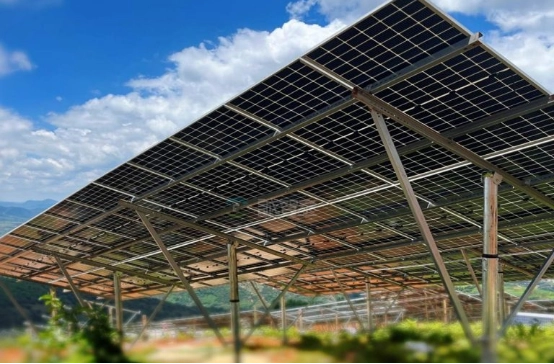
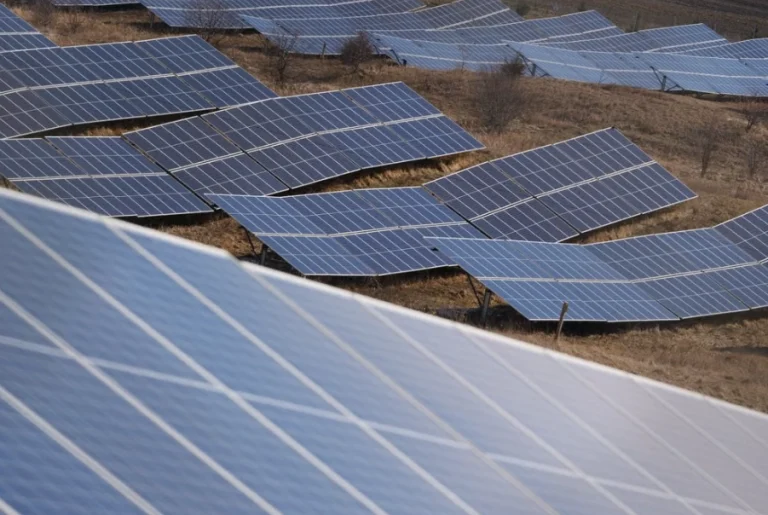
Flexible solar mounting support is a large-span, high-clearance, multi-span structure. This inherent flexibility means systems accommodate vertical height differences without extensive land leveling. We’ve seen sites where traditional racks would have required moving thousands of tons of earth, but cable-based structures can span across ravines, pits, and undulating hillsides with ease. Precision engineering allows for consistent solar module orientation despite ground irregularities, ensuring that energy capture remains high even when the ground is anything but flat.
Maximizing Land Use in Fragmented Terrains
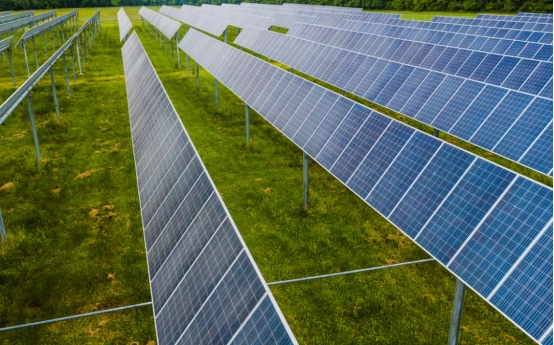
Land is expensive, and often the best solar sites are broken up by obstacles. Installations can be adapted to irregular plot boundaries that traditional racks cannot fill. The ability to bridge obstacles allows for solar deployment on previously unusable land—think narrow strips between roads or rocky patches. Higher ground clearance options facilitate secondary land use such as grazing or light transit, making the project more palatable to local communities.
Minimizing Environmental Impact and Civil Works
The best civil work is the work you don’t have to do. Reduced excavation requirements preserve the natural topsoil and local drainage patterns. Shorter construction timelines result from decreased heavy machinery usage on-site. This lower ecological disruption makes these structures ideal for protected or sensitive areas where you can’t just roll in with a fleet of bulldozers.
Diverse Applications Across Industrial and Natural Landscapes
The versatility of these solar mounting structures opens up sectors that were previously too difficult or expensive to touch.
Integration within Agricultural and Aquacultural Projects
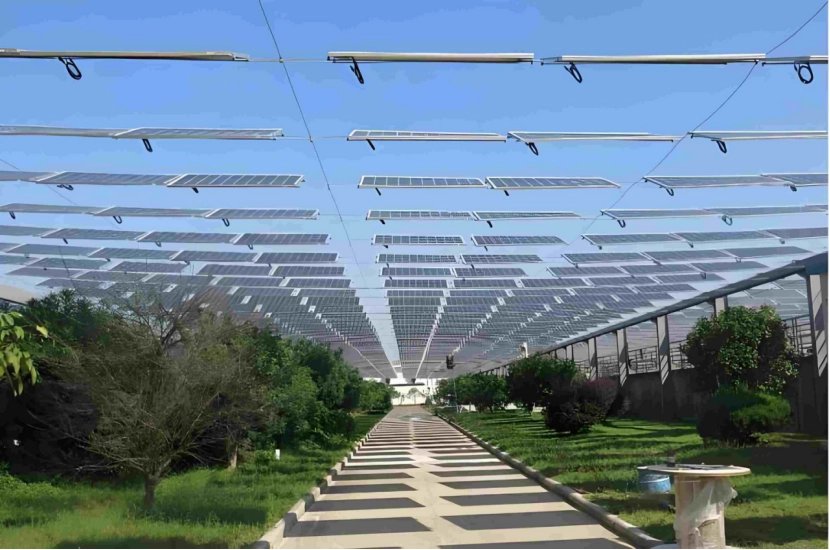
The “Agri-PV” movement relies heavily on this tech. High clearance heights allow for the movement of farm machinery and livestock beneath panels. Under conditions of constant water levels, it can achieve the construction of rigid columns, foundations, and flexible supports in lakes and fish ponds. Flexible spans are easily integrated over fish ponds and water treatment facilities without disturbing the aquatic environment. Additionally, controlled shading provided by the mounting system can optimize microclimates for specific crops, reducing water evaporation.
Deployment on Sewage Treatment Plants and Reservoirs
Covering a sewage tank with a traditional rack is a nightmare of supports and corrosion. Long-span cable structures can cover large open tanks without requiring central supports. Utilizing air space over utility infrastructure increases energy density for municipal projects without needing new land.
Solutions for Mining Subsidence Areas and Brownfields
Mining areas often suffer from shifting ground. Lightweight structures exert minimal pressure on unstable or recovering ground. Adjustable mounting points can be recalibrated if minor soil shifting occurs over time—a feature rigid racks simply don’t offer. Flexible arrays transform unproductive industrial wasteland into renewable energy hubs, giving a second life to brownfields.
Economic Implications for Project Developers and Distributors
Lower logistics costs are achieved through the compact shipping of cable and modular components. You can fit a lot more cable on a truck than you can heavy H-beams. This reduced labor intensity in the field translates to significant savings in Total Installed Cost (TIC). Enhanced energy yield per acre improves the overall Internal Rate of Return (IRR) for stakeholders because you’re filling the gaps other systems leave behind.
Why Choose Flexible Mounting Systems for Your Next Large-Scale Project?
Compatibility with various module types, including bifacial panels, enhances generation efficiency. Scalable designs cater to both medium-sized commercial arrays and massive utility-scale plants. By choosing this path, you are future-proofing assets by utilizing technology that adapts to changing environmental and regulatory standards.
CZT solar is committed to providing one-stop photovoltaic power station solutions for various customers such as large-scale ground power stations, industrial and commercial. Contact us today to discuss your project requirements and explore a customized solar mounting solution built for complex terrain.
Preguntas frecuentes
Q: What is the maximum span for a flexible solar mounting structure?
While it depends on wind loads, spans can often reach 20 to 40 meters between supports, significantly higher than the 3 to 5 meters common in rigid systems.
Q: Are flexible systems more expensive?
While the specialized components may have a higher unit cost, the overall project cost is often lower due to reduced steel usage, fewer foundations, and significantly lower civil engineering (land leveling) costs.
Q: How do they handle heavy snow?
Systems are designed for specific loads. For instance, many CZT solar systems are rated for a 1.4kn/㎡ Snow Load, with the tensioned cables providing the necessary resistance to prevent sagging.
Q: Can these be used with trackers?
While flexible systems are primarily fixed-tilt or seasonal-adjustable, they can be integrated with certain tracking philosophies, though CZT solar one axis tracking system is usually a separate rigid-based product for flatter terrains.





 Spanish
  English
  Japanese
  Korean
  Arabic
  Russian
  French
  Thai
Thai