

The key issue when looking at details on a drawing is how many times that detail is repeated across a large number of solar mounting frames. The connection between parts in solar steel structures affects the amount of time it takes to complete assembly, the ease with which components can be repaired and how loads actually transfer between parts. Both of these elements are important in choosing between the use of bolted or welded connections. The loads the structure is expected to encounter and the manufacturing, transport and installation of individual parts also need to be taken into account.
What Are Bolted and Welded Connections in Solar Steel Structures?
What Are Bolted Connections?
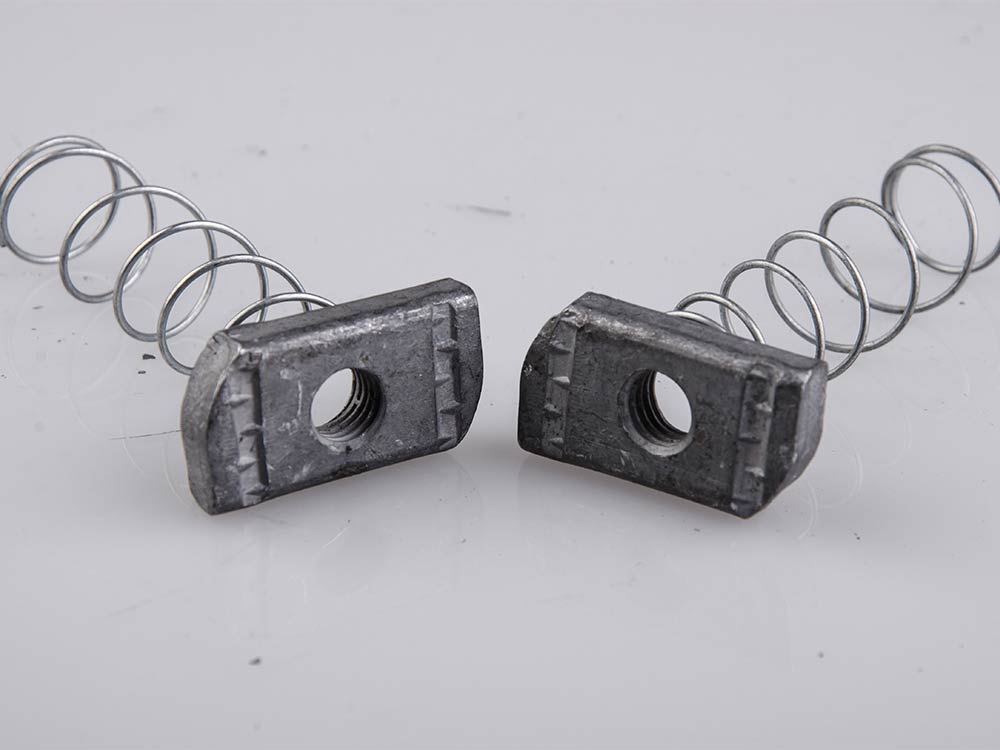
Bolted connections consist of bolts, nuts, washers of appropriate materials, to fit through pre-drilled holes in steel to connect beams to upright posts, or to join braces and brackets together to form part of the structure. Components can be packaged separately for easy transport to the site and, once at the site, the connection can be taken apart for component replacement.
What Are Welded Connections?
First, welded connections combine steel parts into a rigid joint using the metal in the joint and a filler metal (in the form of wire or a rod). Welded connections are useful for making connection plates, brackets and complete sections (so called prefabricated frames) which are all to be fabricated from steel prior to installation. Obviously such connections cannot be disassembled without being cut and/ or ground away.
Bolted Connections: Advantages and Disadvantages
Key Advantages of Bolted Connections
Of course, parts can be packaged separately and connected on site with suitable tools. Lines of components can be aligned in advance in order to work efficiently and within a limited tolerance to be finally tightened. It is easy to replace individual braces later on.
Potential Limitations of Bolted Connections
Points to note: while connected parts appear to fit together well to allow installation within an approved tolerance, note also the potential problems with the wrong bolt for the job, inappropriately coated bolts, insufficient tightening of bolts, the requirement for pretension where specified and the requirement for snug tightening of certain joint types.
Welded Connections: Advantages and Disadvantages
Key Advantages of Welded Connections
As weld connections in steel fabrication they provide strong joints with fewer parts of hardware. In repeated work in factories, fixtures are used to hold the steel components together. One area where welding is useful is in fabrication of solar steel and that is for complex shapes which cannot be bolted together easily.
Potential Limitations of Welded Connections
Welded connections rely on qualified staff who follow set procedures which can then be inspected for quality. Thin steel sections can distort when welded so check for any distortion after welding. As welded components are typically permanently joined it can be more time consuming to complete any repairs to welded steel parts compared to unbolting a part and replacing it with an alternative bolted part. Welding after galvanizing requires appropriate repair of damaged zinc coating around welds.
Bolted vs Welded Connections: Key Differences
|
Comparison Factor |
Bolted Connections |
Welded Connections |
|---|---|---|
|
Connection Method |
Mechanical fastening |
Fusion welding |
|
Installation |
Fastener assembly |
Welding and finishing |
|
Adjustability |
Within designed tolerances |
Limited after welding |
|
Disassembly |
Generally easier |
Usually requires cutting |
|
Fabrication |
Accurate holes and fit |
Welding procedures and equipment |
|
Inspection |
Fasteners and tightening |
Weld quality and dimensions |
|
Protección contra la corrosión |
Compatible fasteners and coatings |
Coating restoration where damaged |
|
Maintenance |
Replace removable parts |
Repair may need fabrication |
A connection can be designed to meet the required structural properties regardless of whether it is a welded connection or a bolted connection. A weld is not automatically stronger than a bolt group.
Cost to drill and weld or inspect members at the fab vs. cost to transport assembled structures to the job site. In many cases bolted parts will allow the installing contractor to assemble the structure in an organized and efficient manner. Some details are better welded as sub-assemblies and then bolted to the rest of the structure on site. Some details are simply better bolted in the first place. Protection of the joint for durability to resist corrosion will be a major consideration. Some coatings will be damaged in the field and must be repaired prior to applying additional coatings. Waterproofness of the joint must also be considered in the design of the connection.
Which Connection Method Is Better for Different Solar Mounting Applications?
Ground-Mounted Solar Structures
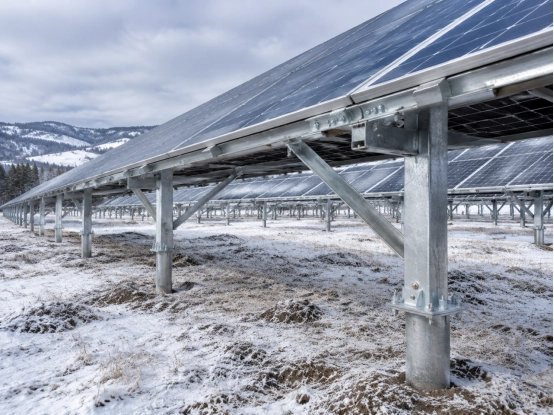
Repeated use of identical connections for posts, beams and braces in ground-mounted solar structures (e.g. gusset plates or double angle cleats) will typically mean that bolted connections are more organized. On the odd occasion that one requires a welded sub-assembly, this can be designed as a separate item also.
Rooftop and Solar Carport Structures
For the Roof Top and Solar Carport Structures solution, solar carport structures favor welding in the factory and then bolting onto site assembled structural members. Space for roof access and lifting of installed structural members must be considered when allowing tool access alongside crane access.
Custom Solar Steel Components
Custom welded steel components can be designed to have fixed shapes as needed. Some welded components can be bolted together to connect to other members at the job site.
Six Factors to Consider When Choosing Between Bolted and Welded Connections
Structural Load Requirements: Requirements regarding wind uplift, snow and the forces transferred at joints must be checked.
Steel Material and Thickness: Check if the steel material of the solar steel components as well as their thickness fit for the planned connections.
Environmental Conditions: Here we have to take into account possible corrosion from salt from coastal air, humidity and the risk of water to enter the steel connection.
Manufacturing Capabilities: Check the ability of the manufacturing plant to accurately punch holes, weld and test parts.
Installation Conditions: Look at the tools, labor and weather you have available for installation. With regard to the lifting of materials, your construction time frame must also be considered.
Long-Term Maintenance: Make room for easy access for checking solar steel connections and replace components as required.
All the decisions with respect to the connection type should be made against the drawings, against the local codes and against the calculations of the structural engineer. The connection type itself does not make a safe connection. All the details required to produce the connection must be resolved before production commences.
Quality Control for Reliable Solar Steel Connections
Quality Control for Bolted Connections
The type and quality of the bolts (e.g. bolting grade) must be checked as well as their diameter, length and coating. The holes must also be checked for correct position and fit prior to tightening. Use the correct method for tightening as specified in the design and have the necessary tools available. Record all necessary inspections and trace any missing parts.
Quality Control for Welded Connections
Verify the Welding Procedure Specification (WPS), the locations of the welds and the dimensions of the items to be welded. Perform the required inspections on the welds. Check the assembly for distortion after welding and repair any damage to the galvanizing of the items in accordance with the applicable specification.
How CZT Solar Supports Solar Steel Structure Fabrication
Integrated Manufacturing Capabilities
We can perform the cold forming, punching, laser cutting and bending processes to produce your parts. The required machine or manual welding can also be performed to form the required components for welding. Completed pre-assembly with checking for proper fit before packaging is also available.
Customized Solar Mounting Solutions
Our custom solar mounting solutions are made to your exact drawings including steel profiles, welded parts and other OEM connection components. We provide fixed and tracking systems for ground mounted systems as well as rooftop solar systems and even carport solar systems.
One-Stop Service for Global Solar Projects
All development, production, sales and project management is handled by CZT Solar. In order to give you the most accurate quotation possible please ensure that you include all relevant drawings, quantity of parts required, coating required and delivery time needed.
Frequently Asked Questions
Q1: Are bolted connections better than welded connections for solar mounting systems?
Neither is always better than the other. Rather, design requirements, site conditions, as well as subsequent maintenance of Steel Framed Structures all have to be taken into account.
Q2: Can bolted and welded connections be used together in solar steel structures?
Yes. Factory-welded assemblies can use bolted site connections.
Q3: Do welded connections affect galvanized steel?
Yes. Local zinc protection of galvanized steel can be damaged by welding and must be repaired suitably.
Conclusion: Choosing the Right Connection for Your Solar Project
Bolts are best suited for applications where connection disassembly is required for components maintenance, repair while welds are better suited for fabricated detail components that are permanently assembled. CZT Solar can assist with design of your solar steel structures and assist with best suited connection configurations for your solar installation drawings. Contact CZT Solar for your customized solar mounting and steel fabrication solutions.






 Spanish
 English
 Japanese
 Korean
 Arabic
 Russian
 French
 Thai