

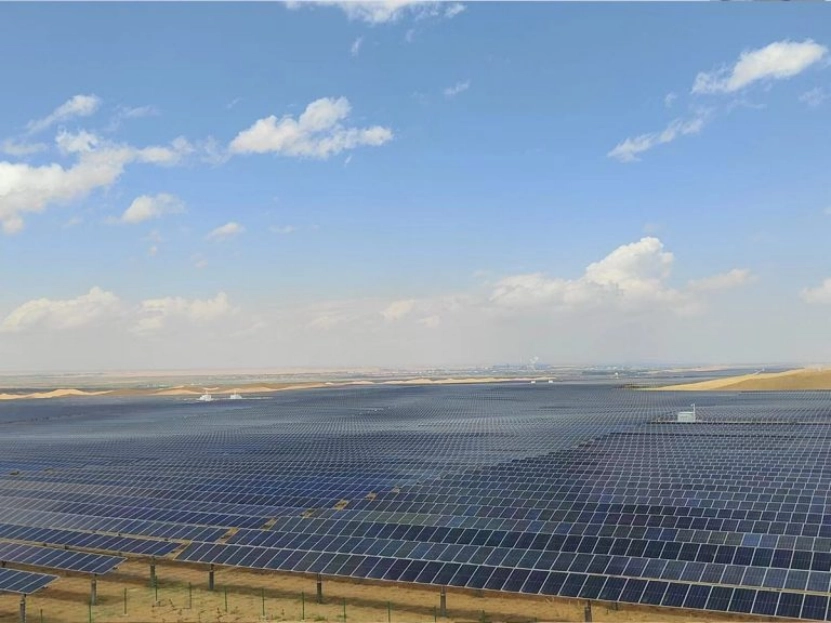
Choosing between a 1P and 2P solar tracker changes tracker width, torque demand, foundation reactions, installation workflow, cable access, and maintenance.
A 1P tracker is usually narrower and easier to handle. A 2P tracker can reduce row count and suit compact layouts. The better option depends on wind, soil, module size, terrain, and project economics.
What Are 1P and 2P Solar Trackers?
A 1P tracker carries one portrait module across the width of the tracker table. A 2P tracker carries two portrait modules, normally arranged on opposite sides of the rotating axis.
Both are used in horizontal single-axis tracking systems. The terms describe module arrangement, not the number of motors or axes.
With large-format modules, the difference becomes significant. A two-module-wide table can alter wind response, installation height, and access. In moderate conditions, 2P may be efficient. With large bifacial modules in a high-wind region, 1P is often the safer choice.
How Do the Structural Designs of 1P and 2P Trackers Differ?
The load path runs through the torque tube, bearings, posts, piles, and soil.
Tracker Width and Structural Loads
A 2P tracker presents a wider rotating surface. Under wind, that can create higher torque around the axis and larger bending forces in the tube and posts. Gusting and repeated oscillation also matter; a static pressure check may not show the full response.
A 1P tracker has a narrower table and a shorter lever arm from the module edge to the axis. Torsional control is often easier. Long rows, high clearance, large modules, or weak soil can still require heavy steel.
Torque Tube, Posts and Foundations
A 2P design may need a larger torque tube, thicker wall, closer post spacing, stronger bearings, or a higher-capacity drive. Piles may also require greater section size or embedment.
A 1P system may use lighter members but require more rows and foundation points. Some apparent steel savings can disappear at site level.
Foundation design should not be selected from the 1P or 2P label alone. Wind speed, snow load, module dimensions, slope, pile tests, and local codes remain decisive.
How Do 1P and 2P Tracker Installation Requirements Compare?
Installation crews usually notice the difference immediately.
A 1P tracker provides a narrower working zone. Module lifting, alignment, clamping, and cable connection are easier to control. This matters with modern high-power modules, where weight and glass size already test manual handling limits.
A 2P tracker may reduce row count, but each table is wider. Upper module positions can be harder to reach, and alignment errors become more visible. Poor pile-driving tolerance may create fit-up problems at bearings and supports.
Installation productivity depends on:
- Module size and weight
- Pile-driving accuracy
- Factory pre-assembly
- Terrain variation
- Lifting equipment
- Crew experience
On a flat site with accurate surveying, 2P installation can move quickly. On rolling terrain, it often needs more adjustment.

What Are the O&M Differences Between 1P and 2P Solar Trackers?
O&M teams care about access, spare parts, and replacement time.
Inspection and Component Access
The narrower geometry of a 1P tracker usually improves access to modules, clamps, connectors, and cable runs.
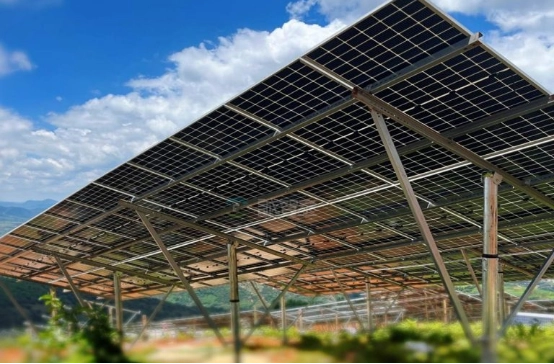
With 2P trackers, the upper module position can be awkward at certain angles. A clamp or module replacement may require a platform or lifting aid. Across a utility-scale site, repeated access time becomes an operating cost.
Wider tables can also create tighter working spaces near drainage channels or uneven ground.
Mechanical and Electrical Maintenance
Both systems require inspection of bearings, drives, fasteners, structural connections, cables, and corrosion protection. A 2P tracker may place greater demand on bearings and drives because of its wider table.
Cable routing is easy to underestimate. Poorly supported harnesses can rub, stretch, or strain connectors after thousands of tracking cycles.
Good O&M performance depends more on detail design than on the label. Accessible fasteners, replaceable drives, protected cable paths, and clear spare-parts documentation matter.
How Do 1P and 2P Trackers Compare in Performance, Land Use and Cost?
The trade-off is not simply lighter structure versus denser layout.
| Comparison Factor | 1P Solar Tracker | 2P Solar Tracker |
| Module arrangement | One portrait module | Two portrait modules |
| Tracker width | Narrower | Wider |
| Wind response | Usually easier to control | Often needs stronger design |
| Module access | Generally easier | Upper modules may be harder to reach |
| Installation | Simpler handling | More alignment and access concerns |
| Land layout | May require more rows | May reduce row count |
| Structural demand | Often lower per table | Often higher per table |
A low tracker price per watt can be misleading. The useful comparison includes steel, piles, grading, labor, wiring, cleaning access, spare parts, and downtime.
Which Solar Tracker Configuration Is Better for Your Project?
The answer becomes clearer once project constraints are ranked.
A 1P Tracker May Be More Suitable When
- Large or heavy modules are specified
- Wind loading is a major concern
- Easy module access matters
- Lifting equipment is limited
- Rear-side shading must be minimized
A 2P Tracker May Be More Suitable When
- The layout benefits from fewer, wider rows
- Land use is tightly constrained
- The tracker-module combination is validated
- Crews can manage the wider table safely
- The structural premium is justified
These are screening points, not design rules. Energy modeling, structural analysis, pile testing, and installation planning should confirm the choice.
What Should EPCs Ask a Solar Tracker Supplier Before Choosing 1P or 2P?
A supplier should answer practical questions:
- Is the tracker validated for project wind and snow conditions?
- Are module dimensions and clamp zones compatible?
- Which pile options suit the soil?
- What installation tolerances are allowed?
- How are bearings, drives, and cables accessed?
- Which calculations and test reports are available?
- Can sections and connections be customized?
- Which spare parts are recommended?
Clear answers during design usually prevent expensive improvisation during construction.
Conclusion: 1P or 2P Is a Project-Specific Engineering Decision
A 1P tracker often provides a cleaner structural path, easier module handling, and better maintenance access. A 2P tracker can support a compact layout where land geometry favors wider tables.
Wind, soil, module size, row length, installation method, and O&M strategy interact. The better tracker is the one that remains predictable after the layout drawing reaches the field.
CZT Solar provides customized 1P and 2P solar tracker structures, steel components and project-specific engineering support. Contact our team to compare tracker configurations for your site conditions and module specifications.
คำถามที่พบบ่อย
Q: Is a 1P solar tracker always cheaper than a 2P tracker?
No. A 1P table may use lighter members, but the project may require more rows, piles, drives, and electrical runs.
Q: Which tracker is better for bifacial modules?
1P is often preferred because its narrower structure can reduce rear-side shading and improve access. A well-designed 2P system can still perform well.
Q: Which tracker is better in high-wind areas?
1P is commonly easier to engineer for high wind because of its narrower table and lower torsional demand. Site-specific analysis and stow strategy remain essential.






 Thai
Thai  English
  Japanese
  Korean
  Spanish
  Arabic
  Russian
  French