

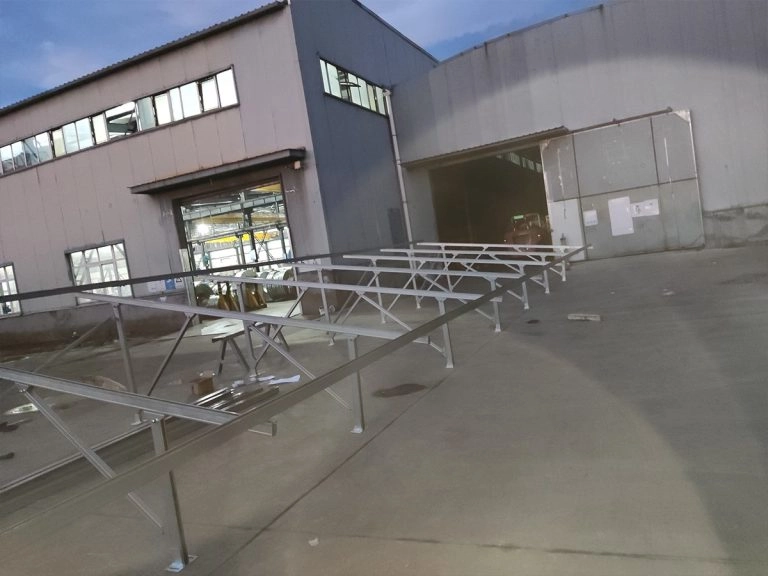
Solar mounting work is repetitive: posts, beams, rails, braces, plates, bolts. That repetition makes small errors expensive.
A hole shifted by 2 mm may seem harmless. Across hundreds of tables, it can force crews to enlarge holes, grind edges, or wait for replacements.
Custom laser cut parts move fitting work from the site to the factory. Hole patterns, slots, notches, profiles, and identification marks are produced from approved drawings before packing. The result is a more predictable installation process.
What Installation Problems Can Standard Solar Mounting Parts Cause?
Standard parts work when profile sizes, foundation spacing, and connections are also standard. Many projects are not.
A carport may use a non-standard beam. A ground mount project may need longer slots because pile positions vary. A retrofit may involve existing steelwork that is close to the drawing—but not close enough.
The usual response is practical: drill another hole, add a washer, grind an edge, or pull members into position. The row gets assembled, but coating damage and extra labor follow.
One adjustment is manageable. Two thousand are not. A three minute correction repeated across 4,000 connections becomes a project issue.
How Do Custom Laser Cut Parts Improve Installation Accuracy and Speed?
Laser cutting does not correct weak engineering. It reproduces a sound design consistently, even when several crews are working under pressure.
Precise Hole Patterns Reduce Alignment Errors
Laser cutting places bolt holes, slots, cable openings, and plate edges directly from CAD data. When the drawing is correct, the same geometry repeats from part to part.
Beams sit closer to their intended position. Braces meet posts without being twisted. Base plates align with anchor bolts. This matters where several members meet at one joint, since a small plate error can affect the rail angle farther along the table.
Slots are also useful. Properly designed, they provide controlled adjustment for pile tolerance, thermal movement, or minor assembly variation.
Pre-Cut Features Simplify Component Positioning
A plate can do more than join two members.
Notches can show orientation. Tabs can locate a bracket against a channel edge. Etched numbers can separate left hand and right hand parts. These details remove small decisions from the site.
On a sloped carport frame, several brackets may look almost identical. Marking and shaping each part for one position reduces reversed installation.
Repeatable Dimensions Support Large Scale Assembly
Large solar projects depend on rhythm. One crew sets posts, another installs beams, and another follows with rails.
Repeatable parts keep that sequence moving. Bolt locations stay consistent, bracket profiles match assembly jigs, and quality teams can inspect samples against one drawing.
When CZT Solar produces custom plates or brackets as part of a mounting package, the useful point is not the laser alone. The parts can be matched to the surrounding steel profiles, hole patterns, and pre-assembly method.
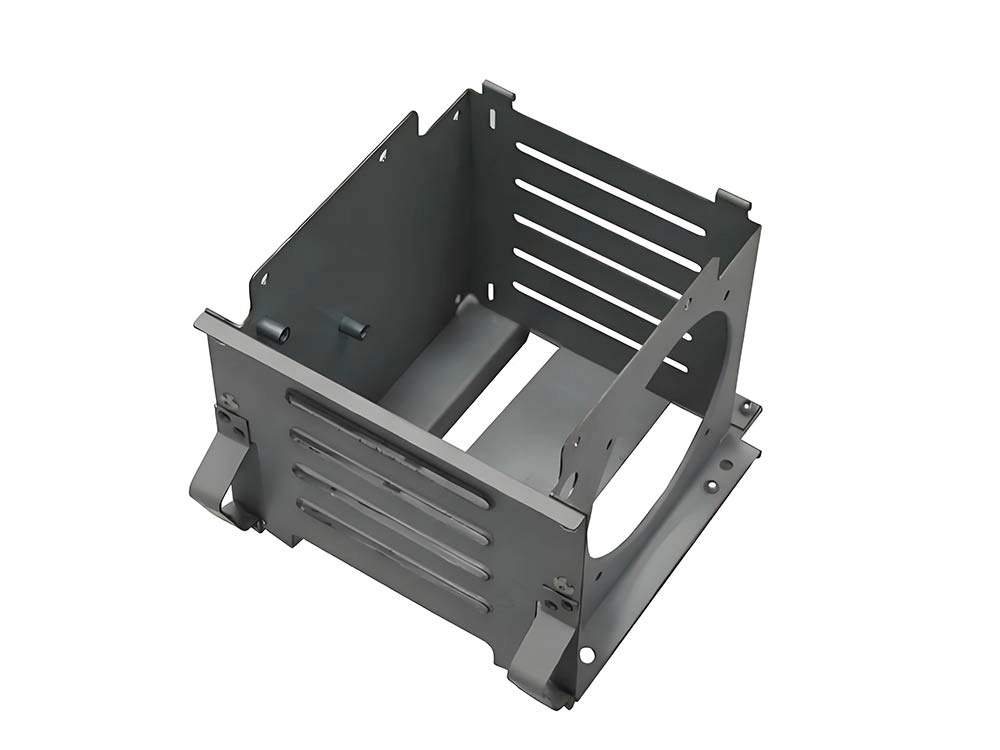
Which Laser Cut Parts Are Commonly Used in Solar Mounting Systems?
Common parts are usually the small pieces connecting larger structural members.
| Laser Cut Part | Типичное применение | Installation Benefit |
| Base plates | Posts to foundations | Improves anchor alignment |
| Splice plates | Rails, beams, or channels | Keeps joints consistent |
| Custom brackets | Rails, braces, modules, or posts | Reduces site drilling |
| Gusset plates | Structural joints | Simplifies bolted assembly |
| Slotted plates | Adjustable connections | Manages field tolerance |
| Cable support plates | Cable routing | Avoids separate site fabrication |
Tracker systems often need tighter alignment around moving parts. Carports use more project specific beam and column connections. Ground mount systems benefit from slotted plates where pile tolerances are expected.
What Should Be Specified Before Producing Custom Laser Cut Parts?
A laser cutter can reproduce an error efficiently. Good input data matters more than cutting speed.
Drawings and Dimensional Requirements
A fabrication drawing should define:
- Overall dimensions
- Hole and slot sizes
- Material thickness
- Bend direction
- Weld locations
- Critical tolerances
- Part identification
Mating components should also be reviewed. A bracket may match its drawing but still interfere with a bolt head or rail lip.
Material and Thickness
Material affects strength, corrosion resistance, forming, and cost.
Carbon steel is common for structural plates. Stainless steel suits selected corrosive connections. Aluminum reduces weight but needs attention to galvanic corrosion. Zn-Al-Mg coated steel may suit formed components in demanding environments.
Thickness should follow the load path. A thicker plate is not automatically better; it may add cost and simply move the weak point elsewhere.
Surface Treatment and Project Environment
Coating problems often begin at cut edges, holes, and welds.
Parts intended for hot dip galvanizing are normally cut, bent, and welded before coating. Pre-coated material needs its cut edge behavior checked against the environment. Coastal sites, high humidity, and long design lives deserve particular attention.
For custom work handled through CZT Solar, fabrication sequence and coating can be reviewed with the bracket geometry—not after the part is finalized.
When Are Custom Laser Cut Components Most Valuable?
Custom parts offer the clearest value where there is repetition, unusual geometry, or expensive site labor.
Typical cases include:
- Utility scale projects with thousands of repeated joints
- Carports with project specific beam connections
- Trackers requiring precise alignment
- Uneven terrain needing adjustment slots
- Retrofit work involving existing steel
- Systems using special channels or mixed profiles
A small rooftop system may not justify extensive customization. A 30 MW ground mount project often will.
On a sloped site, a correctly designed slotted plate can absorb expected pile tolerance. The installer adjusts, tightens, and moves on. No torch. No improvised hole.
Do Custom Laser Cut Parts Reduce Total Installation Cost?
A custom part may cost more per piece. Installed cost is the better comparison.
Relevant items include:
- Site labor
- Drilling and cutting equipment
- Rework and replacement parts
- Coating repair
- Inspection time
- Schedule disruption
Where labor is expensive or access is difficult, factory cut parts can recover their added cost. For low quantities, customization may add unnecessary setup.
Saving four minutes on ten connections means little. Saving four minutes on 8,000 connections changes the installation plan.
How Can Buyers Order the Right Custom Parts for a Solar Project?
The process should be controlled through drawings and sample approval.
- Confirm the connection design and expected site tolerance.
- Issue drawings with material and coating requirements.
- Mark critical dimensions instead of tightening every tolerance.
- Produce a sample for fit up.
- Check bolt access, bends, welds, and coating sequence.
- Approve the final production drawing.
- Define labeling and packing by installation area.
Part numbering is easy to overlook. It should not be. A well made bracket delivered to the wrong installation zone is still a delay.
Conclusion: Better Parts Create a More Predictable Installation Process
Custom laser cut parts reduce field drilling, improve fit up, and protect installation rhythm. Their value is highest when designed as part of the mounting system, not as isolated metal pieces.
That is where a supplier such as CZT Solar fits naturally: drawings, steel profiles, custom plates, brackets, coatings, and packing can be reviewed as one installation package.
A clean drawing helps. A sample fit up helps more.
Frequently Asked Questions
Q: Are laser cut parts suitable for every solar project?
No. Standard components are usually sufficient for simple systems with low quantities. Custom parts make more sense when geometry, tolerance, repetition, or labor cost justifies the added engineering.
Q: What files are normally required?
DXF or DWG files are commonly used for cutting geometry. A PDF fabrication drawing should define material, thickness, tolerances, bending, welding, and surface treatment.
Q: Can galvanized steel be laser cut?
Yes, but sequence matters. Hot dip galvanized parts are normally cut, bent, and welded before galvanizing. Pre-coated steel may require cut edge protection.
Q: Should a prototype be produced before mass production?
For a new bracket, unusual joint, or high volume order, yes. A prototype can expose interference, wrong bend direction, poor bolt access, or unrealistic tolerances before the full batch is made.





 Russian
  English
  Japanese
  Korean
  Spanish
  Arabic
  French
  Thai
Thai