

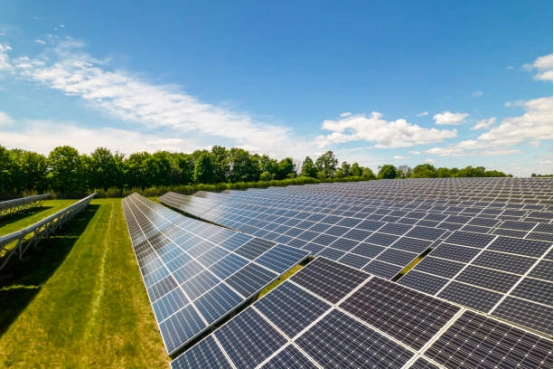
A solar mounting system can have excellent steelwork and still underperform if its foundation is poorly matched to the site. Foundation choice affects wind resistance, installation time, construction cost and the ability to repair or remove the array later.
Ground screws, driven piles and concrete foundations are common solutions for ground-mounted solar projects. Each one has a practical place. The right choice depends less on personal preference than on soil behavior, site access, structural loads and the construction schedule.
What Every Solar Mounting Foundation Must Deliver
A solar foundation transfers the loads from the array into the ground. The connection must resist wind uplift and lateral movement. It must also handle compression and overturning forces throughout the project’s service life.
Soil conditions deserve close attention. A site may look flat and simple yet contain fill, shallow rock or loose layers that change dramatically across a few rows. Groundwater can affect corrosion. Frost depth can influence embedment. Local wind and snow requirements determine the forces that the foundation must resist.
Ground Screw Foundations for Solar Mounting
Ground screws are attractive when a project needs speed and limited disturbance. They work well when the soil profile is reasonably predictable.
How Ground Screws Work
A helical steel screw is installed into the ground with hydraulic torque equipment. Helical plates engage the soil below the surface. The installer monitors torque during placement. That reading can provide a useful indication of installation resistance, although it is not a replacement for engineering checks.
The screw head connects to the solar mounting structure through an adjustable bracket or adapter. This allows the installer to set the required height without extensive concrete work.
Main Advantages
Ground screws require little excavation. There is no concrete curing period, which can make a difference when a project is working against a tight delivery window. A crew can install the foundations and begin mounting steel in the same phase of work.
Site disturbance is usually lower than with cast-in-place footings. On an agricultural site, that can simplify restoration after construction. Screws can also be removed with suitable equipment. That matters for temporary arrays or leased land.
Limitations and Risks
Rock, buried rubble and very dense layers can stop a screw before it reaches the required depth. Loose or highly variable soil may also produce inconsistent capacity. A project near an old industrial site may look suitable on a map and still encounter unexpected debris.
Corrosion protection must match the soil environment. Galvanization or another specified coating should be selected from the design requirements rather than treated as a generic upgrade. Where soil conditions change across the site, some rows may need a different foundation solution.
Best-Fit Applications
Ground screws suit projects with moderate and predictable soil conditions. They are useful where low disturbance, removal potential and installation speed carry real value. A small commercial array near a working facility is one example. The low noise profile can also help where neighbors are close.
Driven Pile Foundations for Solar Mounting
Driven piles remain a strong option for large solar farms. Their advantage becomes clearer when the layout contains thousands of repeated foundation points.
How Driven Piles Work
Steel posts are driven into the soil with vibratory or impact equipment. The section may be a C, U, H or I profile, depending on the racking design and load requirements. The pile is installed to a specified embedment depth. Its cut-off height is then controlled before the rails and module supports are attached.
Installation records matter. Refusal depth, driving energy and pile alignment should be recorded as part of quality control. Field pull-out testing may be needed to confirm design assumptions.
Main Advantages
Driven piles can move quickly across an open site. Once the equipment and crew are established, the installation process is repetitive and efficient. There is little concrete handling. That reduces curing-related delays and keeps the construction sequence straightforward.
For a utility-scale project with consistent soil, driven piles often provide a practical balance between material use and installation output. Standardized pile sections can also simplify procurement and replacement planning.
Limitations and Risks
Rock layers may cause refusal. Pre-drilling can solve the problem, but it adds equipment and time. Impact driving produces noise and vibration. That can be difficult near homes, hospitals or operating industrial equipment.
Alignment needs discipline. A small height error repeated across many rows can create problems when torque tubes or rails are installed. Soil corrosion should be assessed as part of the foundation specification, not after the steel arrives on site.
Best-Fit Applications
Driven piles are usually strongest for utility-scale and large commercial projects. They work best where access is open and the soil profile is reasonably uniform. A rocky ridge or a noise-restricted urban edge may point toward another solution.
Concrete Foundations for Solar Mounting
Concrete foundations take more planning, but they remain valuable when the ground is difficult or the site has unusual load requirements.
How Concrete Foundations Work
The system may use cast-in-place reinforced footings, precast blocks or ballast-based units. Excavated footings transfer loads through concrete and reinforcement. Precast or ballast solutions can reduce wet construction, although transport and lifting become more important.
The design must account for bearing capacity, frost depth, drainage and reinforcement details. Concrete is not automatically a stronger answer. Its performance depends on the footing geometry and the ground below it.
Main Advantages
Concrete offers flexibility on sites where deep steel installation is unreliable. It can be adapted to weak soil, shallow rock or areas where pile driving is prohibited. Engineers can increase footing dimensions or reinforcement when the project carries higher uplift or overturning loads.
The method is familiar to many local contractors. That can be useful in markets with established concrete supply chains and inspection practices.
Limitations and Risks
Concrete foundations involve excavation, formwork, reinforcement and delivery logistics. The concrete must reach the required strength before the structure is loaded. Wet weather can disrupt the schedule.
The method creates more site disturbance than screws or driven piles. It may also increase restoration work and embodied carbon. Removing the foundations at the end of a land lease can be expensive.
Ground Screw vs. Driven Pile vs. Concrete Foundation: Side-by-Side Comparison
The comparison below is a useful starting point. It is not a substitute for a soil report or structural design.
| Critères | Ground Screw | Driven Pile | Concrete Foundation |
| Installation speed | Fast | Very fast at scale | Slower due to curing |
| Excavation | Minimal | Minimal | Moderate to extensive |
| Soil suitability | Moderate and predictable soils | Consistent soils | Variable or weak soils |
| Noise and vibration | Faible | Moderate to high | Low during installation |
| Site disturbance | Faible | Low to moderate | Higher |
| Removal potential | Relatively easy | Modéré | More difficult |
| Main cost drivers | Torque equipment and steel | Driving equipment and testing | Concrete, labor and logistics |
Actual cost depends on transportation, local labor, equipment availability and project size. A foundation that looks inexpensive per unit can become costly if it requires pre-drilling or extensive testing.
How to Choose the Right Solar Foundation
Start with the soil. Review refusal depth, groundwater, corrosion risk and the presence of fill.
Driven piles may be efficient for a large site with repetitive rows. Ground screws can make more sense when rapid installation and low disturbance matter. Concrete is often more adaptable when the subsurface is weak or highly variable. A large array with mixed ground conditions may use a hybrid approach. One section can use driven piles while another uses screws or concrete footings.
The final choice should combine structural calculations with field tests. That is where a mounting supplier with relevant design experience becomes useful.
How CZT Solar Can Support the Complete Mounting Solution
CZT Solar provides solar mounting systems and metal structural components for projects that need coordinated sourcing. Foundation selection should match the rails, beams, brackets, clamps and other structural parts used above ground.
Sharing the site location, soil report, design loads and estimated quantity allows the supplier to assess the mounting configuration more accurately. It also reduces the risk of treating the foundation as an isolated purchase.
Frequently Asked Questions
Q: Which solar foundation is the cheapest?
There is no fixed answer. Driven piles can be economical at scale. Ground screws may reduce labor and restoration costs. Concrete can become competitive where steel installation is difficult.
Q: Are ground screws suitable for rocky soil?
They may work in fractured or shallow rock with the right equipment. Solid rock or buried debris can require pre-drilling or a different foundation.
Q: How deep should driven piles be installed?
Depth depends on soil resistance and structural loads. It should be confirmed through engineering calculations and field testing.
Q: Do concrete foundations require a soil test?
Yes. Bearing capacity, settlement, groundwater and frost conditions affect footing design.
Q: Can one project combine ground screws and driven piles?
Yes. A hybrid design can be practical when soil conditions vary across the site.
Conclusion
Ground screws favor low disturbance and flexible installation. Driven piles suit fast construction across large, consistent sites. Concrete foundations provide adaptability when soil or site restrictions complicate steel installation.
Need help selecting a compatible solar mounting solution?
Send CZT Solar your soil report, site location, design loads and project quantity for a project-specific recommendation.







 French
  English
  Japanese
  Korean
  Spanish
  Arabic
  Russian
  Thai
Thai