

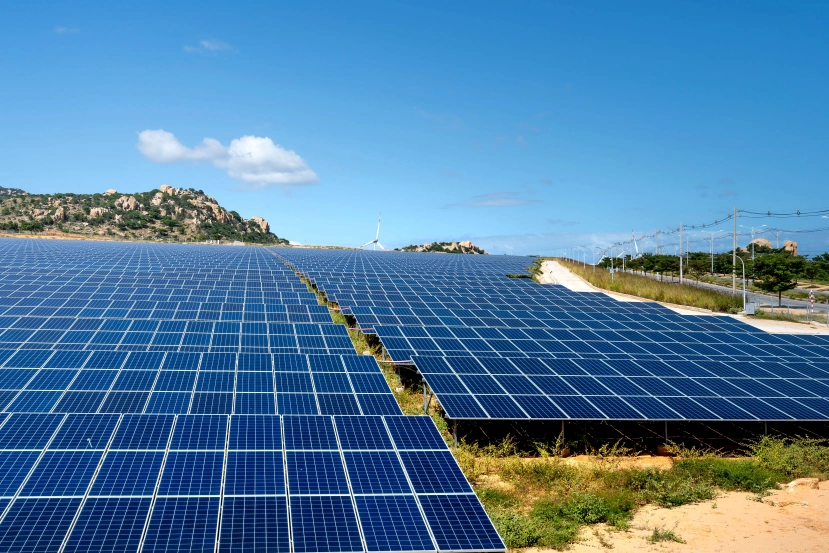
For agrivoltaic projects, the mounting structure is not just a frame under the panels. It decides whether the land can still work as farmland.
A normal ground mounted solar plant mainly cares about generation, layout density, foundation cost, and installation speed. Agrivoltaics adds harder questions. Crops still need light and ventilation. Soil needs access. Farm machines need turning space.
On paper, many layouts look clean. On site, the questions are direct. Can a small tractor pass through? Will the lower edge of the module block airflow for vegetables? Can the posts handle irrigation moisture, fertilizer, and open field wind year after year?
A good agrivoltaic structure should protect both power generation and agricultural use. When one side is pushed too far, the project becomes difficult to operate.
What Makes a Good Agrivoltaic Solar Mounting Structure?
The best structure is rarely the most complicated one. It is the one that fits the land, the crop, the weather, and the daily operation.
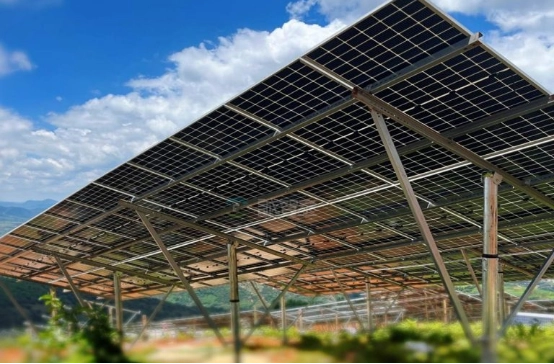
Higher ground clearance is usually necessary. Vineyards, berries, leafy vegetables, grazing areas, and greenhouse type planting zones all need different clear heights.
Structural strength matters more than it seems in the quotation stage. Agrivoltaic systems are often taller than standard ground mounts. A higher post helps farming, but it also increases bending force at the foundation.
Material choice deserves attention. Hot dip galvanized steel and zinc-aluminum-magnesium coated steel are often preferred because the environment is not gentle. Humidity, mud, and fertilizer dust can shorten weak coatings.
Installation should stay simple. Pre-assembled parts, standardized connections, and clear bolt layouts reduce mistakes. Basic details, yes. But basic details often decide project speed.
Best Solar Mounting Structures for Agrivoltaic Projects
Several structure types can work for agrivoltaic sites. The right choice depends on what the land must do after the modules are installed. A vegetable field is not a grazing area. Flat inland farmland is not the same as sloped land near the coast.
Elevated Fixed Ground Mounting System
An elevated fixed ground mounting system is still one of the most dependable choices for many agrivoltaic projects.
Its value is simple. Stable structure, predictable cost, almost no moving parts. Maintenance teams understand it quickly.
For farmland where machinery access matters, post height, row spacing, and beam span must be designed around real field work. A grower may need clearance for small tractors or spraying equipment. That does not mean making the post “a little taller.” The foundation, bracing, purlin size, and wind load calculation all have to follow.
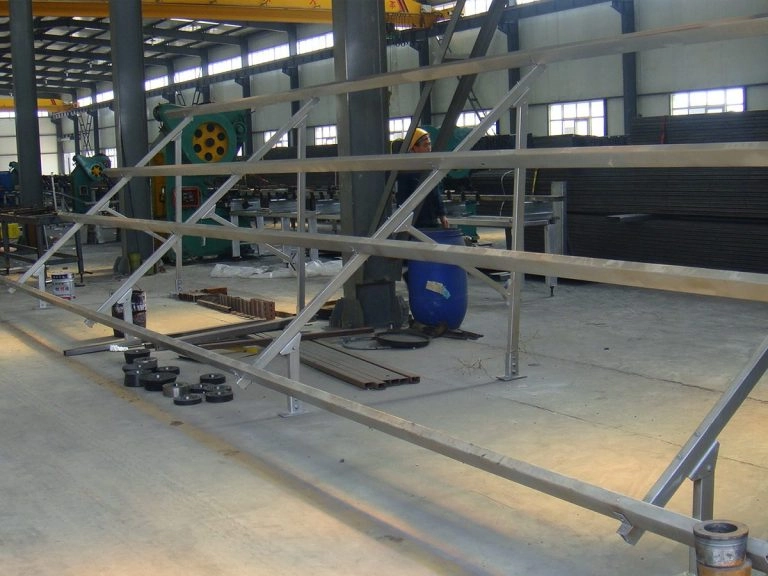
Single Axis Solar Tracker for Agrivoltaics
A single axis solar tracker is a strong option when energy yield is the main pressure.
The panels rotate during the day to follow the sun, so the system can generate more power than a fixed structure in many high irradiation regions. For agrivoltaic projects, that extra output can matter, especially when land cost or grid connection capacity is tight.
But a tracker should not be selected only because it sounds advanced. It needs space, reliable drive components, and maintenance access. Moving modules also change the shadow pattern during the day. Sometimes that helps crops that tolerate partial shade. Sometimes it creates a problem.
From a structure point of view, stiffness and alignment are critical.
Flexible Solar Mounting System
A نظام تركيب شمسي مرن can be useful where traditional pile and beam structures become awkward.
This type is often considered for wider spans, uneven terrain, or sites where fewer foundations are preferred. By using cable supported or tensioned structural concepts, it can leave more open space below the modules.
The benefit is clear. Better space under the array. The caution is also clear. Engineering control must be strict. Cable tension, anchor design, wind vibration, and installation accuracy all matter.
How to Choose the Right Structure for Your Agrivoltaic Project
The right structure usually becomes clearer after a few hard questions.
What crop will be planted under the panels? How tall will it grow? Will machines pass through every week or only during harvest season? Is the site exposed to strong wind? Is snow load part of the calculation? Does the owner care more about lower initial cost or higher power generation?
There is no single best answer. A fixed elevated system may be the safest decision for stable farmland operation. A single axis tracker may make more sense where output has priority. A flexible system may solve spacing and terrain problems that standard structures cannot handle neatly.
Good design begins with the site, not with a product catalog.
Why Work with CZT Solar?
CZT Solar works as a PV mounting system and metal structure manufacturer, which matters for agrivoltaic projects because many details need customization. CZT Solar can support fixed ground mounting systems, solar trackers, flexible mounting systems, and customized metal components.
These projects are rarely copied directly from a standard ground solar plant. Post height may change. Beam length may change. Foundation type may change. Bracing may be adjusted because farm access is needed.
Conclusion
A successful agrivoltaic project needs a mounting structure designed for real land use, not only for panel installation.
The best solution may be an elevated fixed ground mount, a single axis tracker, or a flexible mounting system. The decision should come from site conditions, crop type, wind and snow load, machinery access, and operation requirements.
For agrivoltaic solar project planning, CZT Solar can provide a customized PV mounting structure solution based on site requirements.
Contact CZT Solar to discuss your agrivoltaic mounting system design.
أسئلة متكررة
Q1: What is the best solar mounting structure for agrivoltaic projects?
For many projects, an elevated fixed ground mounting system is practical. If higher power generation is required, a single axis tracker may be better.
Q2: How high should agrivoltaic solar structures be?
The height depends on crop type, machinery access, and maintenance needs.
Q3: Can solar trackers be used in agrivoltaic projects?
Yes. Single axis trackers can improve energy yield, but shadow pattern and maintenance access should be reviewed carefully.
Q4: What materials are commonly used for agrivoltaic mounting systems?
Hot dip galvanized steel, zinc-aluminum-magnesium coated steel, aluminum profiles, and stainless steel fasteners are commonly used.
Q5: Can CZT Solar provide customized agrivoltaic mounting solutions?
Yes. CZT Solar can design and manufacture customized photovoltaic installation structures according to project site conditions.





 Arabic
  English
  Japanese
  Korean
  Spanish
  Russian
  French
  Thai
Thai